[ad_1]
At every Met Gala, the conversation inevitably circles two things: how the theme is interpreted, and how the look is remembered. This year, though, it feels especially revealing—when “Fashion Is Art” lands at the heart of both creation and viewing, the red carpet stops being merely “a runway for clothes” and starts to resemble a kind of experimental arena that pushes people toward the centre of art.
For the Met’s Costume Institute Spring 2026 exhibition Costume Art, curator Andrew Bolton explains that the event addresses the “the centrality of the dressed body in the museum’s vast collection.” While the exhibition itself centres on the dressed body, the dress code of the night “Fashion Is Art” gives guests extraordinary room to play.
Fashion history has never lacked inspiration —designers have long been transforming art—however blurred or esoteric—into wearable pieces, or creating works that are themselves art in the round, unfolded around the body.
Which brings us—no further introduction needed—to the name Robert Wun. The first Hong Kong designer to step onto Paris Haute Couture Week’s schedule quickly became a regular on the red carpet thanks to a design language rich in narrative tension. His Met Gala connection began in 2023, when Olympic gold medalist and next-generation fashion icon Eileen Gu walked the Met Gala steps wearing a haute couture gown stained with red wine.
Later, his own firsthand observations of the brief, chaotic atmosphere in front of the red carpet became one of the creative sparks for his 2025 Fall/Winter couture collection. And now, curator Andrew Bolton has added three of Robert’s works to this year’s exhibition’s permanent holdings. On the red carpet this year, his collaboration with theatre artist Jordan Roth adds yet another layer of creative conversation.
As a seven-time Tony Award-winning Broadway producer, Jordan Roth has long been one of the most anticipated figures on the Met Gala red carpet. He never settles for simply looking good; instead, he treats every appearance as a miniature theatrical production. During 2025 couture week, he presented a powerful performance titled “Radical Acts of Unrelenting Beauty,” which evolved from a recognisable haute couture gown into winged capes and abstract soaring forms, blending multiple art disciplines.
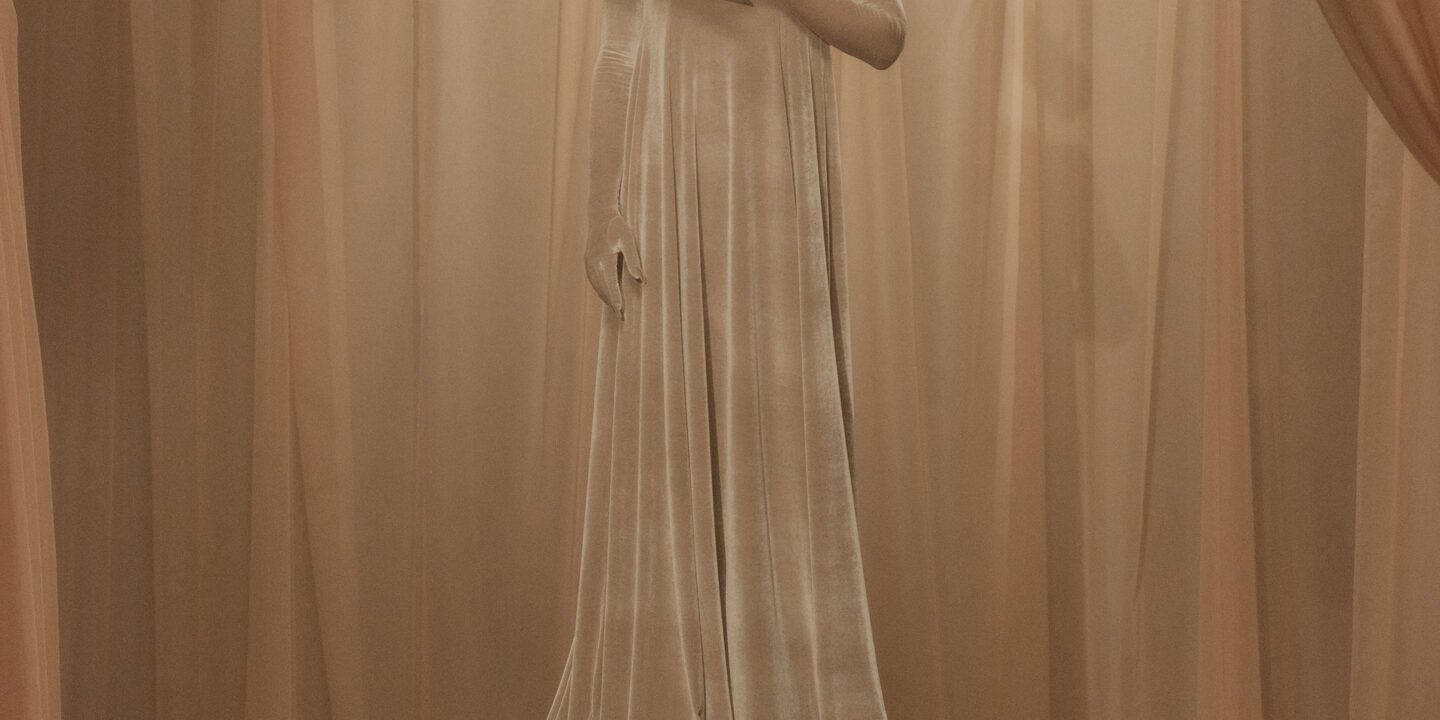
This year, he once again teamed up with Hong Kong-born haute couture designer Robert Wun, along with legendary stylist Patti Wilson and stylist and Menswear Editor at American VOGUE Michael Philouze, to create a breathtaking “The Symbiosis Sculpture”.
The inspiration comes from classical sculpture
For Jordan Roth, “Fashion Is Art” is not merely a theme but an exploration of “the body as both subject and object, both viewer and viewed, both artist and art.” He sees the body as both a canvas for art and a manifestation that each of us is, in our own right, a work of art. This interpretation is reflected in the language of the entire look: it resembles a living stage installation. As Roth ascends the Met Gala steps, his body becomes not just the wearer, but an extension of the artwork itself.
“The story in this look was sparked by my curiosity about multi-figure classical sculpture, which almost always captures a moment of heightened connection (love, desire, fear, violence). What would it feel like to live inside one of those sculptures? To be a living body and animate the other sculpture body? ” says Roth.
His second image comes from one of his beloved Met collection pieces: Jean-Léon Gérôme’s painting “Pygmalion and Galatea”. In the story, the sculptor Pygmalion kisses the statue he created—only for Galatea to come alive in that moment. “It is a moment of transformation and connection, of the porousness between art and body, of the body as canvas.”
In the provided sketch, Wun translated that vision into a “duo” look. This isn’t only an extension of his 2024 spring/summer couture piece The Innocence—it’s also the result of true co-creation. Jordan and a personified sculptural double embrace and lean into one another, with fluid lines in the gowns connecting them as one.
“Jordan is one of the best types of people that you can get to work with. Because he himself has a lot to express. He himself is an artist. He also doesn’t love fashion for the sake of just the fashion side of it. You know, he really appreciates design, craftsmanship, and the idea of expression that comes with fashion,” Wun shares. “Every time you get into a conversation with Jordan, he doesn’t tell you what colour he wants. He doesn’t tell you what kind of style he wants. He tells you a story. He tells you that he wants to feel like he’s shedding off his skin and leaving the past behind him, moving forward to the future, yet embracing it. That’s what he gives you, and he lets you run with it.”
[ad_2]
Source link