[ad_1]
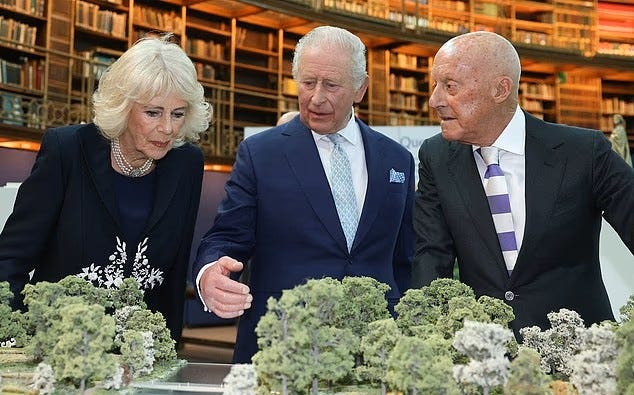
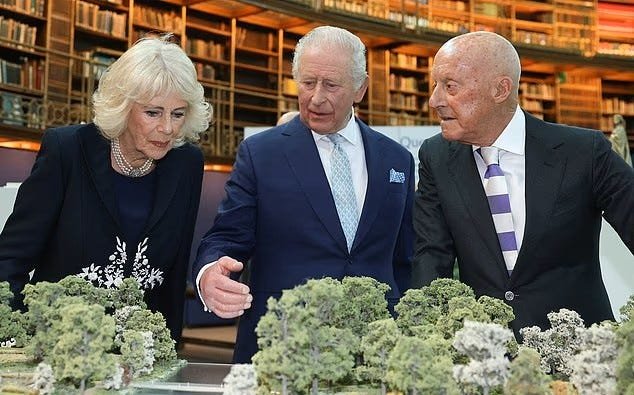
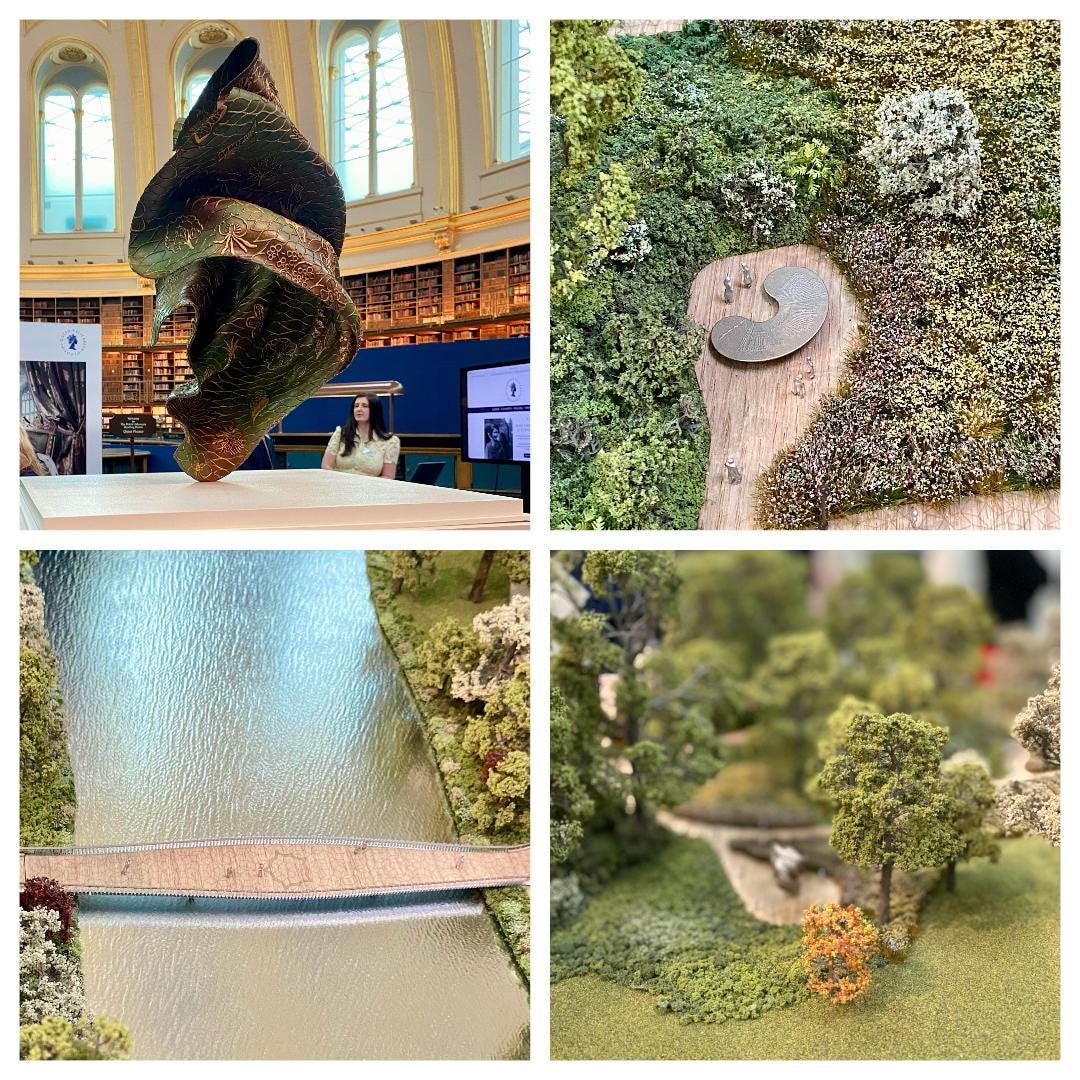
On the centenary of Queen Elizabeth II’s birthday on April 21, 2026, King Charles III and Queen Camilla came to the British Museum to view the final plans for his mother’s official memorial. I was fortunate to be included among some two hundred guests for a private reception at the museum and an opportunity to see the models at close range. Lord Foster, the architect whose team won the competition to create the memorial, showed the monarch the scale model of St. James’s Park where the multi-part memorial will be situated. The King and Queen also examined maquettes of the statues of Elizabeth II and Prince Philip and several distinctive features intended to illuminate aspects of the Queen’s life and legacy: a Commonwealth Wind Sculpture by Yinka Shonibare depicting flowers on the Queen’s coronation dress, a Commonwealth Compass designed by Lord Foster, and a steel and translucent glass bridge across St. James’ Lake based on the Russian Fringe Tiara that the Queen wore on her wedding day.
Royals Extra readers may recall that last spring I wrote about the significance of the memorial to Britain’s longest reigning monarch in The Queen Elizabeth II Memorial in London Begins to Take Shape (April 14, 2025) and expressed my hope that Norman Foster’s design would win in Royals Extra Update: My Pick for the Queen Elizabeth II Memorial in London (May 7, 2025). On June 24TH, the eight-member selection committee headed by Lord Janvrin, formerly Elizabeth II’s private secretary, announced their choice of Foster + Partners.
The final scheme presented at The British Museum reflected major changes to the original plan. The most striking alteration was the replacement of Foster’s vision of a large statue of the Queen on horseback facing the Mall. Also gone was a smaller statue of Elizabeth II and Prince Philip standing together on the other side of St. James’s Park, in front of a new Prince Philip Gate at Birdcage Walk. Instead, the memorial will feature a ten-foot-tall bronze statue of the Queen in her twenties atop a fourteen-foot plinth overlooking the Mall, with a seven-foot-tall bronze statue of Prince Philip at the same age on a five-foot plinth, standing some sixty-five feet behind her in St. James’s Park inside the Marlborough Gate. A bust of an older Queen—likely in her sixties—will be placed on the other side of the park facing Birdcage Walk, and there will be no Prince Philip Gate.
The proposed equestrian statue of the Queen had many fans, including myself, knowing how much she was defined by her love of horses. After conversations with people involved in the design process, I have come around to the new depictions. I’ll explain below the rationale behind the changes and the approach of the principal sculptor, Martin Jennings, against the backdrop of an uneasy history between King Charles and Lord Foster. From photographs I took at the reception, I’ll show details and perspective on the memorial that is expected to be unveiled in 2028. I’ll also describe the only statue of the Queen on horseback located in Britain, and how it came to be.
[ad_2]
Source link