[ad_1]
While January is a famously slow month, often feeling longer than the 31 days we are assigned, the art market, in typical fashion, refuses to conform to personal scheduling. In the unanimous post-Christmas slump experienced by most, the art market is instead gearing up for January art fairs, including the London Art Fair, and preparing consignments ahead of the March auction season.
Our drawn-out days are shy in front of auction schedules, and most dialogue in art circles will centre on the endless conversation of the art market’s recovery of the previous year. Instead of analyzing past market trends in an attempt to predict future ones, this new monthly segment does something simpler; it looks squarely at the past month.
Below are five art-market events from January and February that help make sense of where things stand right now—no finance or art history degree required.
1. Christie’s Scores Major Belgian Collection
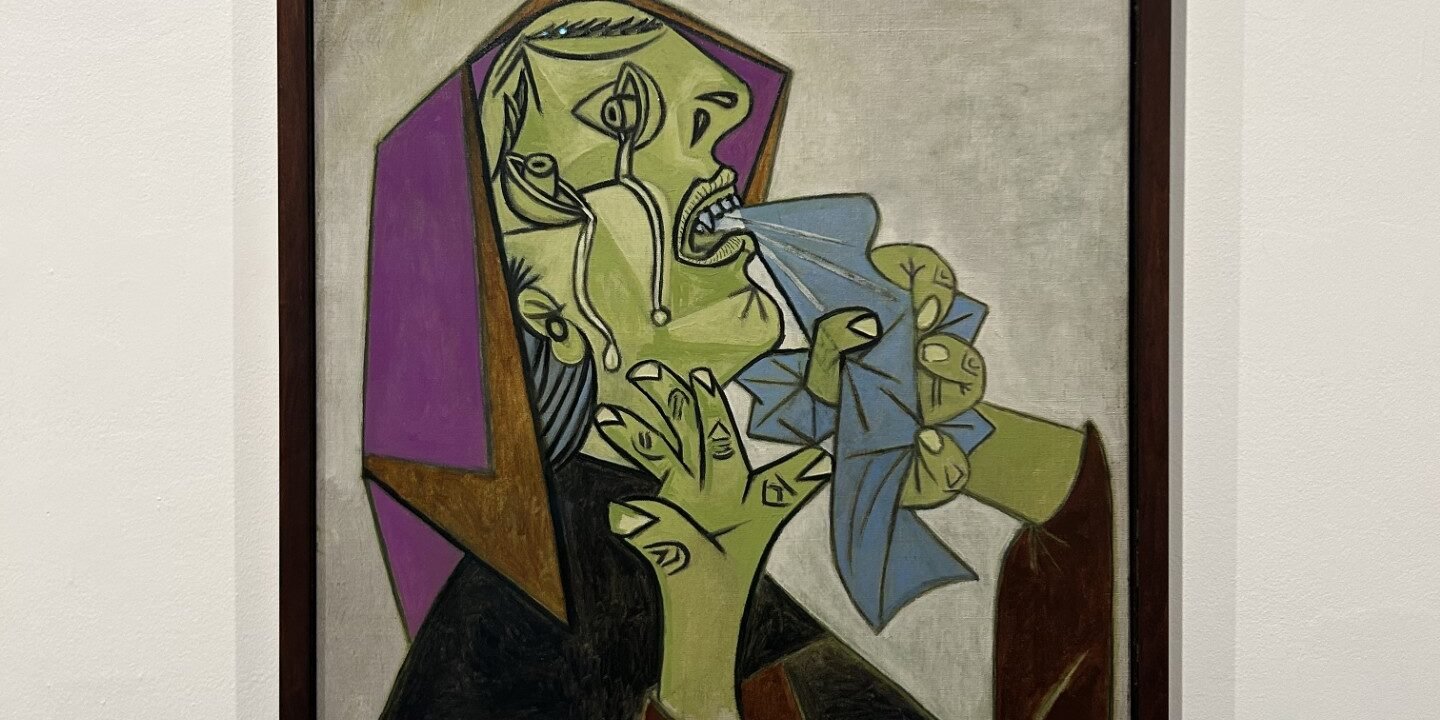
On the auction front, Christie’s has secured the estate of late Belgian collectors Roger and Hosette Vanthournout – over 200 works heading to London’s March sales with a predicted estimate of $53.5 million. Roughly a third of their consignment comprises both Surrealist and Dada works – an opportune timing when we consider the success of last year’s surrealist sales (here I am thinking of both Sotheby’s Exquisite Corpus Evening Auction of November, and Surrealism and its Legacy of October). Of the Vanthournout sale, highlights include a René Magritte leaf painting (estimated at $4.7 million), Max Ernst’s 1921 Seascape (estimated at $2 million) and a Picasso Cubist portrait of Dora Maar.
2. The Rise of a ‘Strategic Pause’ in Art Fairs and Galleries
A new phrase is circulating in the art world, coined the ‘Strategic pause’, as both dealers and fairs announce programming breaks. Last week, Vienna’s Spark Art Fair announced a hiatus, and days earlier, Berlin dealer Mehdi Shukri revealed his 30-year-old gallery would temporarily suspend exhibitions. This trend started last summer when the Art Dealers Association of America’s venerable Art Show coined the term while skipping a year to reimagine its future. Taipei Dangdai (a major art fair in Taipei) followed suit, pausing to reassess its model and timing.
Though a pause like this was once unthinkable, these pauses signal a shift in business behaviour, and a recognition that the art world of a decade ago is not returning. Client habits are changing, the global fair calendar is overcrowded, and costs are rising while returns shrink. Unlike a closure, indicative of failure, these increasing pauses suggest agency and strategy. These brakes, when applied mindfully, may pay dividends in the long run.
3. Art-Backed Loan Defaults Surge
This month, the art-backed lending market saw dramatic turbulence. Art-backed loans (using valuable artworks to secure collateral for financing) increasingly defaulted, with roughly half of loans by non-bank businesses failing to meet financial obligations in 2024, rising from 17% in 2023, according to Deloitte Private and ArtTactic. Private banks did better, with none reporting defaults. Despite volatility, the market is projected to grow from $33.9 billion to between $42 billion and $50 billion by 2027. This split reveals a larger two-tier landscape: traditional banks maintain stability while alternative lenders struggle. For collectors who use art as collateral, the institution matters significantly.
4. South Africa’s Venice Biennale Controversy
After cancelling its Venice Biennale (an international Art exhibition hosted in Venice) pavilion featuring Gabrielle Goliath’s artwork about Gaza violence, South Africa blamed an unidentified foreign nation for proxy power attempts. Officials reportedly named Qatar, according to Ynet News. Culture Minister Gaetan Makenzie claimed concerns arose when learning a foreign nation planned to purchase the artworks post-Biennale, suggesting South Africa’s platform was being used to enforce geopolitical messages with regard to the Israel/Gaza conflict. Goliath called it censorship and a violation of free expression. This pavilion’s future for May’s Biennale remains unclear, highlighting the complex relationship between geopolitics and international art platforms.
5. Years of Research Confirms Discovery of Rembrandt Painting
Rijksmuseum in Amsterdam has announced that after two years of examination, they have discovered a lost Rembrandt painting. Vision of Zacharias in the Temple from 1633 disappeared after being sold to a private owner in 1960. This painting narrates the scene when priest Zacharias learns that he will have a son. In 2015, a Rembrandt was sold privately by the UK government for £35 million, and a once-lost Rembrandt for £11 million in 2023. It will be on display at the museum from 4th March 2026.
[ad_2]
Source link