The email that begins with three photographs
A seller’s journey often begins informally: three photographs taken under household lighting and a short message asking, “Is this worth putting into auction?” The object may be a painting inherited from a relative, a watch bought years earlier, a car that no longer fits the owner’s plans, or a group of works assembled without any intention of becoming a collection.
The following example is a composite scenario, not a real client case. It illustrates the questions a modern auction house should ask before it gives confidence to a seller or presents an object to a buyer.
The hypothetical seller has a signed print, an older luxury watch and a folder of documents that may or may not belong to either item. The temptation is to begin with price. A disciplined consignment process begins with identity, ownership and evidence.
Step one: define the seller and the object
The auction house needs to know who owns the item and who has authority to sell it. An individual may be acting personally, as an executor, for a company or for an estate. That affects the contract, compliance and payout record.
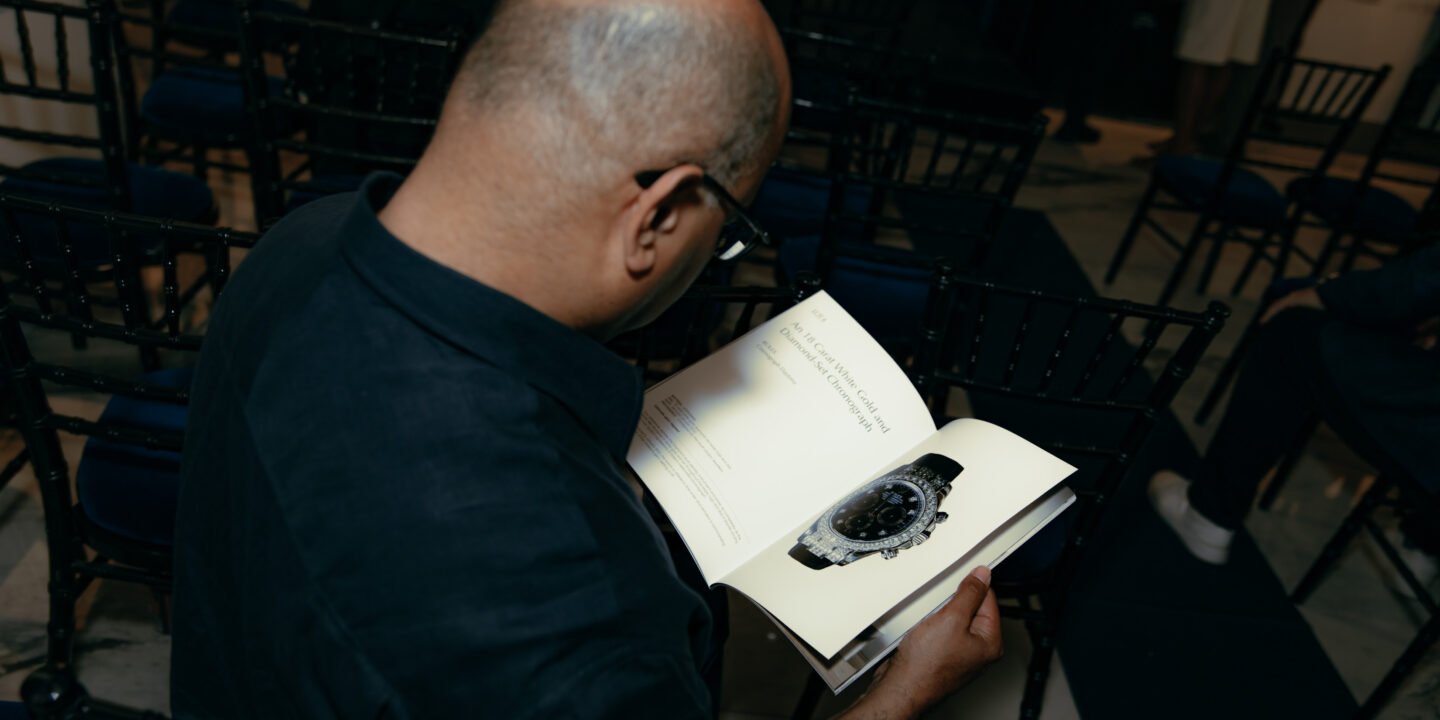
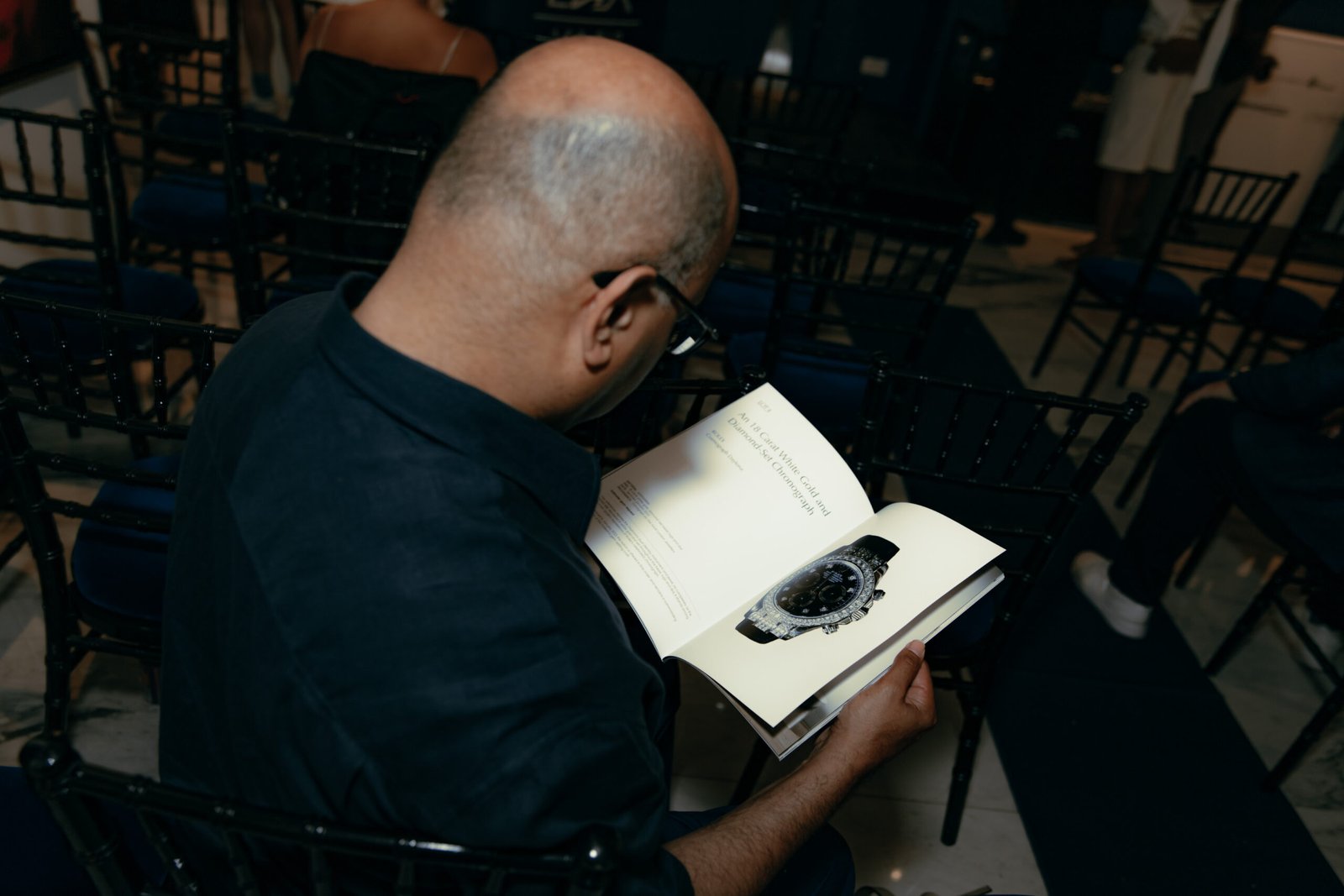
The object also needs a precise identity. An artwork should list the artist or maker, title, date, medium, dimensions, signature, edition, and frame. A watch should list the brand, model, reference, serial, movement, case material, service history, box, and papers. A car should list the registration, chassis number, title, mileage, condition, and history. “Old Rolex” or “signed print” is not enough for responsible marketing.
LAX.BID’s seller submission route is designed to collect this information before publication. London Art Exchange can add a physical review, photography and a conversation around the likely route to market.
Step two: build the proof file
Provenance is not simply a glamorous story about previous ownership. It is the documented chain that helps connect the current seller to the object. Invoices, certificates, gallery labels, service records, exhibition history, correspondence and family documents may all contribute.
A weak proof file does not automatically make an object worthless, but it changes what can responsibly be said and may reduce buyer confidence. A document should be checked for relevance, consistency and authenticity. A certificate relating to another edition, a service invoice with a mismatched serial or an undated family story should not be treated as conclusive evidence.
This is where the seller may encounter the first frustration. The auction house may ask for more information instead of giving an immediate estimate. That delay can feel bureaucratic, but it often protects both sides.
Step three: choose the right specialist
A multi-category auction platform should not pretend one expert can value everything. The print may require an art specialist and condition review. The watch may need inspection by a watchmaker or recognised category expert. A high-value car may require independent mechanical assessment and history checks.
Specialists do not merely produce a number. They help determine attribution, condition, market relevance and the correct comparison set. Two objects by the same maker can have very different values because of date, rarity, condition, model, size, subject or documentation.
Step four: agree a realistic estimate and reserve
The estimate should be a market guide supported by evidence, not a compliment to the seller. Overestimating may win the consignment but damage the sale. An unrealistic reserve can prevent competition and leave the object publicly unsold.
The Art Basel and UBS report shows why selectivity matters. Global sales grew in 2025, but the recovery was uneven. Public auction value rose 9 per cent, while activity below $50,000 declined slightly in both value and volume. That does not mean lower-priced objects cannot sell. It means quality, pricing and presentation remain decisive.
The seller should understand the low and high estimate, the reserve, the opening bid, the seller’s commission, photography or insurance charges, potential taxes and what happens if the lot does not sell. All of this belongs in the consignment agreement.
Step five: decide between auction and another route
Auction can create urgency and price discovery. A private sale may offer confidentiality and more control over timing. London Art Exchange may also consider gallery placement, part-exchange or a longer market-development route for represented artists. The correct answer depends on the object and the seller’s priorities.
A highly recognisable watch with broad demand may suit a competitive sale. An unusual artwork with a narrow buyer pool may require targeted private conversations. An emerging artist’s work may need context and collector development rather than immediate resale.
A responsible adviser should be willing to say that auction is not always the best route.
Step six: prepare the catalogue and campaign
Once accepted, the object needs professional images, measurements, condition details, provenance and an accurate description. Marketing should explain why the lot matters without overstating certainty or future value.
The catalogue is also an operational record. The image, description, estimate and documents should match the physical item. If a watch has replacement parts, say so. If the frame is damaged, show the damage. And if the attribution is qualified, use the correct wording. Buyers may forgive a defect they understand; they are less forgiving when they discover it later.
LAX.BID can use digital distribution, search visibility, client data and the London Art Exchange collector network to place the lot in front of relevant audiences. That reach is useful, but reach is not the same as demand. Judge the campaign by serious enquiries, condition-report requests, registrations, and bids, not impressions alone.
Step seven: the sale and the silence after it
The seller experiences the auction differently from the bidder. Expect long periods of little visible activity, then a rapid sequence of bids. A lot can attract interest and still fail to meet reserve. Another can appear quiet until the final minutes.
The auction house should explain whether the sale is live, timed or hybrid, how telephone and absentee bids are handled, and when the result becomes final. If the lot is unsold, the next conversation should be planned: revise the price, move to private sale, hold, return the object or withdraw it from the market.
Step eight: payment, release and settlement
A hammer result is not yet a seller payout. The buyer must be invoiced, funds must clear, compliance checks may need completion and the object must be released according to procedure. The seller then receives a settlement statement and payment under the agreed timetable.
This stage is where a professional system earns trust. The seller should be able to see what has happened, what remains outstanding and who owns the next action. Automated payments may help, but final approval should remain controlled where risk or documentation requires human review.
The reset is clarity
The modern consignment process is not revolutionary because it uses a website. It is better when it makes hidden stages visible. A seller should understand the required evidence, the reason behind the estimate, the marketing plan for the object, the costs involved, and the outcome of each possible scenario.
For London Art Exchange and LAX.BID, the opportunity is to combine physical inspection, collector relationships and digital auction access. The limitation is that no platform can guarantee acceptance, sale, price or speed. Art and luxury assets are illiquid, and values may fall as well as rise.
The strongest consignment relationship begins when both sides can say no: the seller can reject unsuitable terms, and the auction house can reject an object that is not ready. That is not a failure of service. It is the foundation of a sale that can stand up after the excitement has passed.
art consignment
auction valuation
LAX.BID sell
London Art Exchange
sell luxury items at auction UK
watch auction consignment