[ad_1]
Momentum in the art market might be limited, but art from India and South Asia is one area that is gaining ground. Powered by domestic demand, and the country’s active industrial billionaires, the revival is spilling onto the international art scene, notably in London and at the forthcoming Venice Biennale.
“While much of the global art market is correcting, India is in a phase of structural growth and there is a real shift,” says Jaya Asokan, director of the India Art Fair. She distinguishes the current boom from the shortlived “spike” in values in the early 2000s, “which was more about [speculation from] the diaspora and international demand”, and which quickly collapsed with the global economic downturn.
Today, the ongoing war and tensions in the Middle East, despite hitting India’s stock markets, have not rattled the domestic art market “at this point”, says Roshini Vadehra, director of New Delhi’s Vadehra Gallery. She characterises the sustained demand with the example of her recent solo exhibition, of the Mumbai-based painter Atul Dodiya. His 12 new large-scale oils, which feature people expressionlessly (sometimes from behind) looking at art, “were priced about 20 to 30 per cent higher than his last show [between $80,000 and $100,000 this time] and sold out a week before the exhibition,” she says.

Such demand is spreading overseas. Coming to London in May is the online Mumbai auction house AstaGuru, which will operate in Cromwell Place. The move is “a natural progression” for the business, says Laryssa Jesse, who has joined as managing director UK.
AstaGuru’s revenues have grown 238 per cent since 2023, Jesse confirms, explaining that India’s relative economic prosperity “is driving the growth of first-gen wealth, turning attention to ownership beyond property.” India is also “investing in its own cultural ecosystem.” Ambitious private projects include the Kiran Nadar Museum of Art, due to reopen in a vast building near Delhi’s Indira Gandhi airport this year. Such investments contribute to “a circular economy that boosts the market and then enables that market to participate on a global scale, exposing Indian art, both modern masters and contemporary works, to an international clientele,” she says.
Growing momentum was noticeable at October’s Frieze art fairs in London which had 10 galleries from India in the mix, more than ever before and many prominently placed within the tents. Vadehra is now a regular fixture at Frieze’s gallery building on Cork Street, where forthcoming exhibitors this season also include the New Delhi and Mumbai gallery Nature Morte and Mumbai’s Project 88.
Joining the London fray this spring is Sundaram Tagore Gallery, which opens a new space on Pall Mall in May with a show of artists from and inspired by Asia, including the Bangladeshi sculptor Tayeba Lipi, whose works transform razor blades into everyday objects such as shoes, prams and bathtubs, a reference to violent practices against women in Bangladesh as well as the tools used for the home births that she witnessed growing up. Also featured in the show is the India-born Sohan Qadri, whose vivid paintings drip with deep spirituality.

India’s artists and cultural history are also shaping London’s museum shows, bringing previously lesser-known names and narratives to the fore. Recent exhibitions have included Arpita Singh’s first solo institutional show outside of her native India, at Serpentine Galleries; The Imaginary Institution of India at The Barbican; Ancient India: Living Traditions at the British Museum and the Royal Academy of Art’s A Story of South Asian Art, which traced Indian modernism through sculptures by Mrinalini Mukherjee and which travels to The Hepworth, Wakefield in May. Shows on the slate for 2027 include an exhibition of the multidisciplinary Mumbai artist Nalini Malani at Tate Modern.
Such shows are uncovering art that deserves its moment, says the academic, curator and adviser Xiaoming Zhang, previously head of Asian modern and contemporary art at Sotheby’s. “India’s artists have the freedom to express their spirituality, one of the most important things for any artistic culture,” she says. Today’s artists from the region “have great communication skills, they know how to explain the messages behind their art,” she adds.
Boosting the trend is the reality that cultural institutions need new sources of income. “It couldn’t have happened 20 years ago, you’d be asking where is the patronage, where is the support? Look at it now, look at the ‘pink ball’,” says Conor Macklin, co-owner of London’s Grosvenor Gallery and co-founder of the Art Mumbai fair, referring to the British Museum’s recent fundraising gala. This was glamorously co-hosted by Isha Ambani, daughter of Asia’s richest man and a director of the family’s Mumbai-headquartered Reliance Industries.

Macklin and others point to the country’s wealthy industrial families as “instrumental” when it comes to promoting India’s cultural credentials. “India’s wealthy are very happy to see their names on a wall, it validates their presence as patrons as well as collectors,” Vadehra says.
Kiran Nadar, whose husband founded India’s IT consulting business HCLTech, has been the most visible patron and proponent of the Indian art scene to date — this month she received the inaugural Global Arts Patronage award from Berlin’s Hamburger Bahnhof museum.
Adar Poonawalla, CEO of the vaccine manufacturer Serum Institute of India (SII), took an approximately 20 per cent stake in AstaGuru last year. His wife, the fashion influencer Natasha Poonawalla, is executive director of SII and chair of one of the family’s charitable foundations. The auction house’s launch in London follows their property spree in the capital.
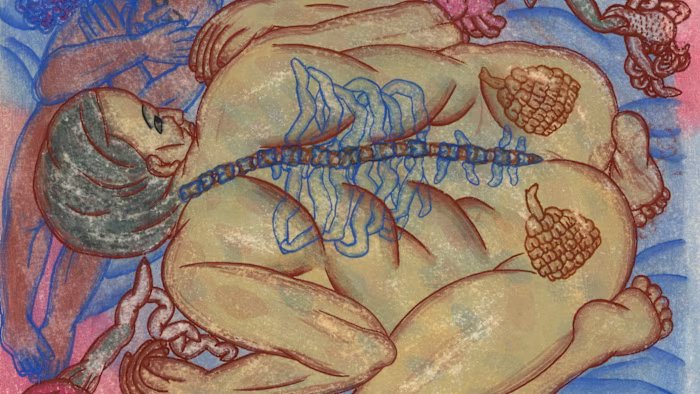
On the art market, the relative lack of recognition for India’s practitioners means they are often relatively cheap. Acknowledged modern masters are leading a gradual revaluation: last year a 14-ft montage of daily life in India by MF Husain — “Untitled (Gram Yatra)” (1954) — sold for $13.7mn, a record for an Indian painting at auction, though a familiar price level for the big-brand western names. More recent art from the region is still playing catch-up. Christie’s has a 2003 Arpita Singh watercolour of a crouching woman, on offer for between $8,000 and $12,000 this week.
The next stop is the Venice Biennale, the art world’s most prestigious and well-attended display of contemporary art, and where this year, Macklin believes, “you will see the India effect”. Artists including the performance duo Hylozoic/Desires (Himali Singh Soin and David Soin Tappeser) are in the main exhibition, while the country has a national pavilion, for the first time since 2019, with a group show that explores the pull of India as a homeland. The Ambani cultural centre in Mumbai is among the pavilion’s supporters while, in the battle of the billionaires, Nadar’s museum brings a solo show of Nalini Malani, as one of the 31 official collateral events at the Biennale.
The future though remains at home, Asokan says, and will be driven out of cities beyond New Delhi and Mumbai. “There’s activity in other places, like Hyderabad, Kolkata, Ahmedabad, Chennai and Jodhpur. The next phase of growth will come from decentralisation in the country.”
[ad_2]
Source link