[ad_1]
As New York thaws from its coldest winter in a decade, Central Park is in bloom—and so, too, is the city’s art market. More than a dozen fairs of varying scale and focus are due to unfurl across Manhattan this month. Setting itself apart from the crowd is Tefaf New York, which returns to the Park Avenue Armory from 15 to 19 May. Bringing together 88 exhibitors from 14 countries, this latest edition of the fair promises more of the brand’s distinctively broad scope, this time spanning Greco-Roman antiquities, jewellery, 20th-century design and contemporary art.
It also arrives a decade after Tefaf New York’s 2016 launch as a two-part fair: an autumn expo devoted to historic art, and a spring counterpart dedicated to Modern and contemporary work. The organisers consolidated the twin fairs into a single annual event in 2022. Conversations with fair leadership, new and returning exhibitors and industry experts suggest that Tefaf New York continues to occupy an indelible place in both the city’s spring fair calendar and the larger Tefaf ecosystem—partly through a willingness to adapt to changing market conditions and collecting tastes without sacrificing its core identity.
Leaning into the Modern
Founded in 1988 through the merger of two Dutch fairs—Pictura and De Antiquairs International—Tefaf has come a long way since its initial emphasis on Old Masters and antiques. Although both the Maastricht and New York iterations now include works by living artists, the Dutch edition maintains a more sweeping historical bent compared to its US cousin’s tighter focus on the 20th century.
“We are effectively the jewel of the global art world because what we bring to New York is very different,” says Leanne Jagtiani, the director of Tefaf New York. “Most of the other fairs in May focus on the contemporary, and our Modern presence is a strong differentiator.”
For Jagtiani and Will Korner, Tefaf’s head of fairs, this emphasis reflects the Empire City’s collecting ecology as much as the wider market. “If you compare which galleries in New York specialise mainly in the 20th versus the 21st century, you’d be really surprised to see the ratio as roughly 50/50 or, if anything, leaning in favour of the 20th century,” Korner tells The Art Newspaper. “Tefaf New York leans into the 20th century just as much as the 21st.” By contrast, he estimates that Art Basel and Frieze are both “80% weighted towards the 21st century”.
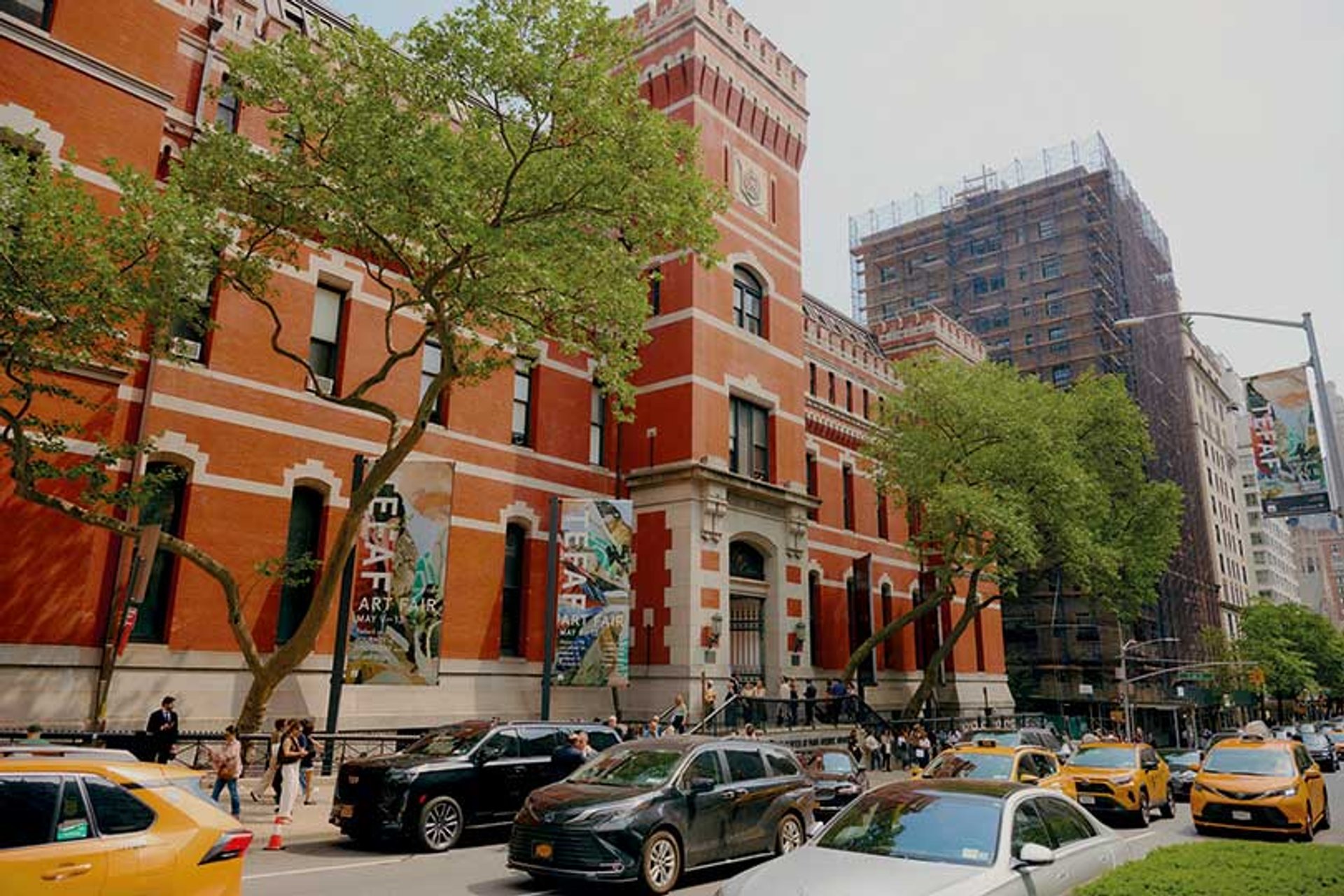
Park Avenue Armory, the venue for Tefaf New York Photo: Vincent Tullo; courtesy Tefaf
This year’s nine new exhibitors echo the fair’s equilibrium between the two centuries. Among the first-timers are: David Lévy, which specialises in the European avant-garde; Larkin Erdmann, which focuses on European Modern and post-war artists; Piano Nobile, known for 20th-century British art; Macklowe Gallery, which deals in 20th-century American decorative arts; and ML Fine Art, whose programme centres on 20th-century Italian art.
John Berggruen, the founder of his namesake San Francisco gallery, returns to Tefaf New York this year after a three-year absence. He credits the quality and scarcity of 20th-century works as two reasons for their return to prominence in the strengthening market of 2026. Furthering the momentum, he adds, are the “new re-evaluations” of US artists ranging from the early Modernists of the Stieglitz Group to Helen Frankenthaler and other Abstract Expressionists. “It was a wonderful time in the American states,” Berggruen says of the era.
Disciplined stands
Part of Tefaf New York’s appeal for exhibitors lies in the synergy between its location and timing. “When it comes to Brafa or Maastricht, these are home games for our gallery,” says Boris Vervoordt, the founder of Axel Vervoordt gallery, which has participated in every edition of Tefaf New York. “Being in New York for Tefaf gives us the opportunities to meet all sorts of people that we might not get to meet in Maastricht or anywhere else,” he adds, referring to the unique combination of fairs, marquee auctions and major gallery shows that bring a worldwide network of collectors to Manhattan in May.
Macklowe Gallery, meanwhile, is based locally but sees similar advantages in participating. “While the fair is just ten blocks from our gallery, it increasingly draws an unparalleled global audience of highly discerning collectors,” says Ben Macklowe, the gallery’s president and second-generation owner.
He adds that Tefaf “operates with more focused areas of discipline” than many comparable fairs. The New York edition is also only around one-third the size of its Maastricht forebear, so every choice about a stand invites greater attention. Macklowe says the gallery will respond by bringing “a strong representation of Tiffany Studios, of which we are the largest dealer in the world”.
The returning London dealer Adrian Sassoon, who has exhibited at Tefaf New York since 2017, also highlights the fair’s concentrated format. “We rely on a more concise group of artists at Tefaf New York than at other fairs, so what we take must stand out and work hard to earn its place on the booth,” says Mark Piolet, a director at the gallery. This year, its stand will include a group of 19 vessels and sculptures by the Australian ceramic artist Pippin Drysdale.
Collecting across categories
Another key to Tefaf New York’s appeal has been its advocacy of cross-category collecting. Although Jagtiani says it is often considered “a trend that’s just coming into people’s consciousness”, Tefaf was one of the first fairs to promote it.
Michael Diaz-Griffith, the chief executive of the Design Leadership Network and the author of The New Antiquarians: At Home with Young Collectors, has seen this approach accelerate since 2000. “To be a serious collector in the 20th century was to specialise in one or two disciplines,” he says. “With less market history, documentation of provenance and technical verification to rely on, it felt easier to be duped, even at the top of the market.”
By contrast, he argues, 21st-century collecting has increasingly become agnostic about eras and categories. He attributes the shift to the ease of attribution research in the age of the internet, a broader loosening of cultural boundaries and “the pluralistic, multivalent, transhistorical way younger people look at things”.
Dealers say they are seeing the same shift in practice, and not only among younger buyers. “Ten years ago, most of the people acquiring Tiffany lamps were antiques collectors,” Macklowe says. “Today we are just as likely to see someone who has a Rothko on their wall and a collection of Lalanne sculpture interested in Tiffany.”
Piolet describes a similar sensibility among clients. “A contemporary silver vessel lives happily with an Old Master painting, just as a porcelain vessel from Japan can speak to a mid-century cabinet,” he says.
The next evolution
What does the next decade hold for Tefaf New York? At a moment when the megafairs are expanding geographically, Tefaf’s leaders indicate that their priorities are broadening the fair’s collector base and cementing its core character. “Rightly or wrongly, if you come to Tefaf Maastricht, you know the kind of people and art you’re going to see, and it’s important to us that New York also has that same strong grounding,” Korner says.
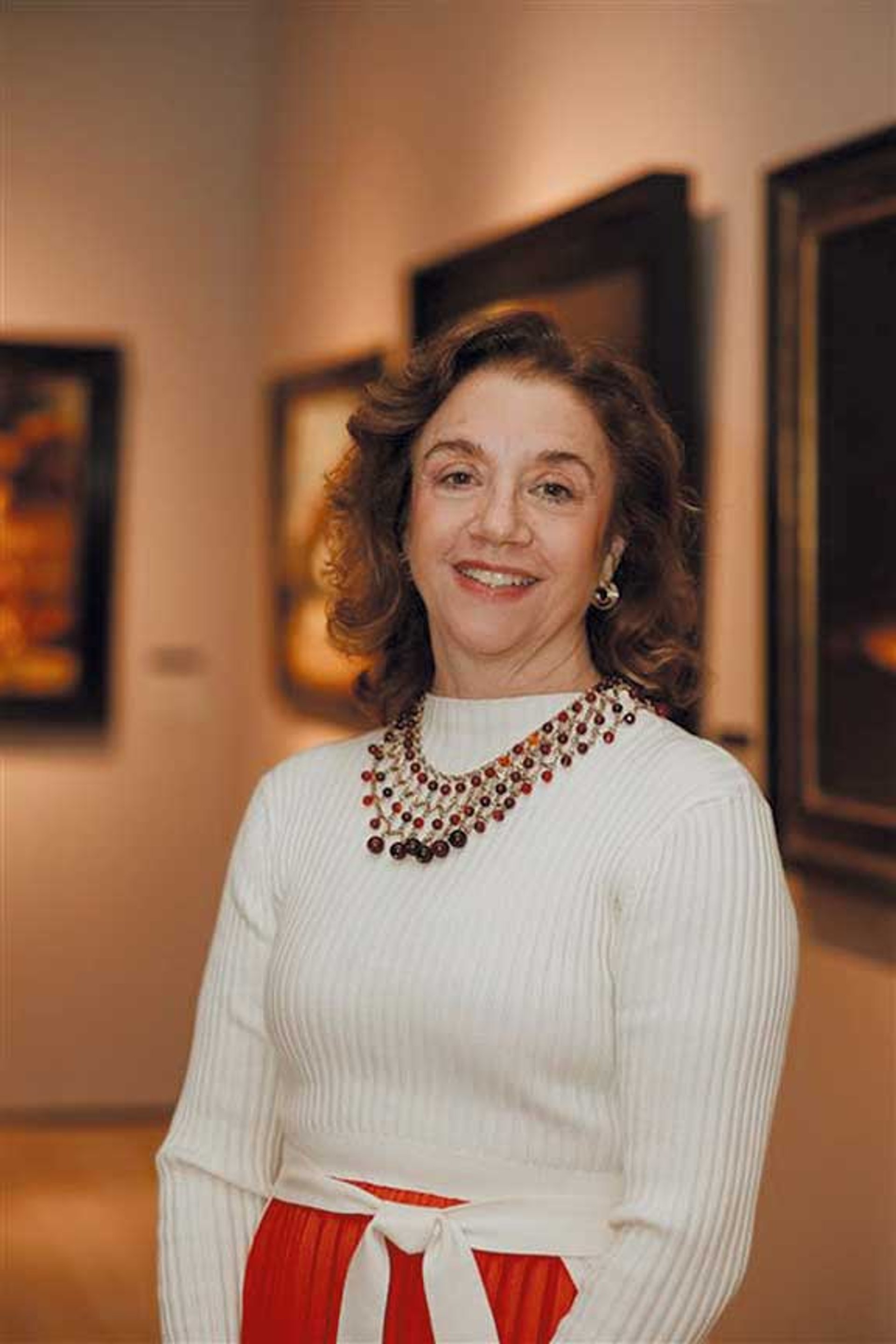
“We are effectively the jewel of the global art world”: Leanne Jagtiani, director, Tefaf New York Photo: Maison Rowena; courtesy Tefaf
Just as exhibitors leverage New York’s May schedule to connect with clients beyond their usual reach, Tefaf itself uses its spring fair to strengthen ties with professionals visiting from further afield. This includes the representatives of private and public institutions across Central and South America, such as the Museo de Arte Latinoamericano de Buenos Aires (Malba), whose participation could lead to further evolution of the Tefaf brand.
For Diaz-Griffith, however, Tefaf New York is already well-positioned in its identity through its commitment to transhistorical collecting. “I’ve felt that, over the past decade, any concern with period as a determining factor in what you’re interested in is dissolving, and that really defines the Tefaf May edition,” he says. “Other fairs in the cross-collecting vein have a more historic focus, but Tefaf has done a very good job of bringing together antiquities and contemporary art under the same roof. I don’t think anyone else has cracked it quite the way they have.”
- Tefaf New York, Park Avenue Armory, 15-19 May
[ad_2]
Source link