[ad_1]


Published 9th Mar 2026, 16:45 GMT
The Leeds Art Fund was founded in 1912 by a group of art lovers and philanthropists who understood the importance of building a collection of artworks for public display in Leeds which would enrich the city’s cultural life. It is one of the oldest supporting ‘friends’ organizations for the visual arts in the UK and in these times of straitened funding for the arts, its work is more important than ever.
“The majority of our funds come through legacies and generous donations from people who feel that it is a good investment to put something back into the city for future generations,” says Corinne Miller, chair of Leeds Art Fund and a former senior curator at Leeds Art Gallery. “When I was at the gallery Leeds Art Fund helped to acquire some wonderful pieces including works by Paula Rego and Grayson Perry. If we hadn’t had the support from LAF, we wouldn’t have been able to acquire those.”
The two men behind the establishment of the Fund were Michael Sadler the Vice Chancellor of the University of Leeds, who brought with him an extensive private collection of modern art, and Leeds Art Gallery curator at the time Frank Ritter. “In its early days the main focus of the organisation was to collect and buy works for the collection and they also had a remit to organise some loan exhibitions,” says Miller. “There was a curatorial element to it and they made some ambitious acquisitions. In 1950 they bought a Francis Bacon painting which caused a bit of a rumpus because people thought it too modern.” From 1968 onwards, a change in policy meant that the LAF was able to make contributions towards purchases rather than always buying artworks outright. “Everything we acquire now comes through the curatorial department of Leeds Museums and Galleries and the collecting policy it follows,” says Miller.

Subscribe to the YP’s Lifestyle newsletter
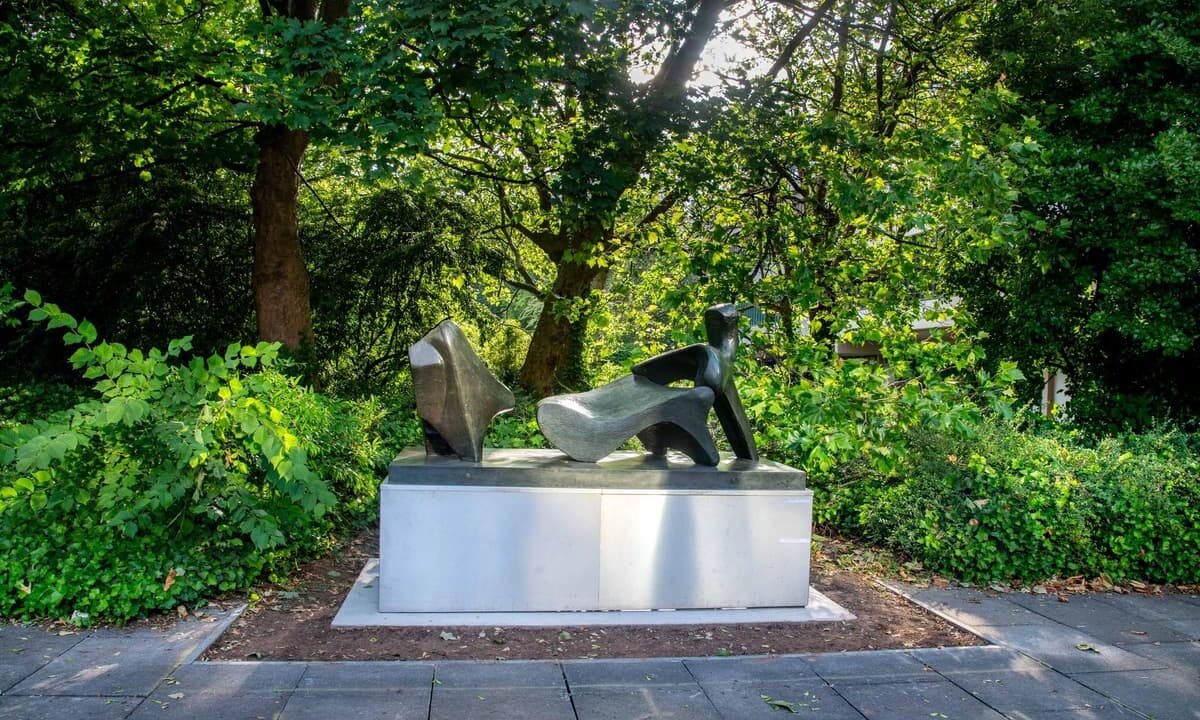
Recent acquisitions have included a major work from 1879 by Leeds artist John Atkinson Grimshaw. “In 2022 we acquired Reflections on the Aire – on strike which had been in a private collection for many years and was offered to Leed Art Gallery,” says Miller. “It is a rare example of one of the artist’s signature ‘moonlit’ scenes combined with a social message.” The strikes were devastating for local industrial workers, with widespread hardship and hunger. Leeds Art Fund met the full cost of the painting, which is currently on display at Leeds Art Gallery as part of the exhibition Don’t Let’s Ask For the Moon: Nocturnes and Atkinson Grimshaw. Another recent acquisition was a Maquette for Hibiscus Rising by Yinka Shonibare, purchased in 2024 with a 75 percent contribution from LAF, while older purchases include The Age of Bronze by Auguste Rodin, purchased with a contribution from LAF in 1994 and Reclining Figure Bridge Prop 1964 by Henry Moore, one of the postwar artworks acquired by LAF and wholly owned by them. That period also saw notable works by Barbara Hepworth, Francis Bacon and Alexander Calder enter the collection.
“I’m very excited about the things that the curators are bringing to us now for funding,” says Miller. “The funding landscape has changed dramatically in recent years so we need to give more support to museums and galleries to ensure that their collections can be enriched. Hopefully we will continue to do that and get involved in ambitious projects.”
In recent years the LAF has supported various building projects including the redevelopment of the magnificent central court at Leeds Art Gallery, creating an expansive gallery space filled with natural light. The space has since hosted a range of interesting projects and installations such as Sani Abulhawa and Bedir Bekar’s skateable sculpture Drift Tricks and James Thompson’s Spatial Drifts which combined sculpture, moving image and site-responsive performance exploring past, present and future versions of the gallery.

The LAF is also supporting young and emerging artists through its Accelerator Bursary; last year it funded the first Accelerator programme delivered by Leeds Art Gallery and Assembly House. Open to students from the three universities in Leeds, the first cohort have just completed the bursary. “Looking to the future we are keen to continue to do that,” says Miller. “We recognize how hard it is for artists to establish their careers in the early days and we feel it is really important to support a new, younger generation of artists.”
For details about Leeds Art Fund, including membership, visit leedsartfund.org
[ad_2]
Source link