[ad_1]
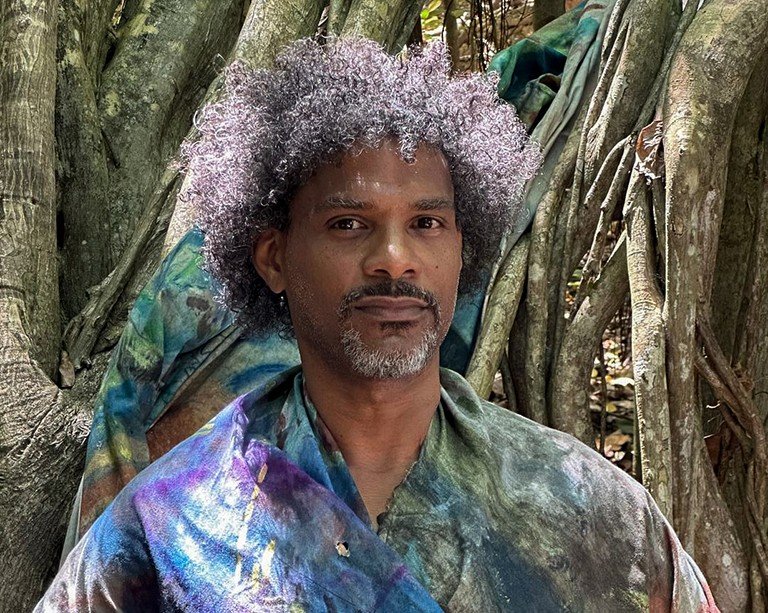
For Ronald Rose-Antoinette, stepping into the role of Max Stern Curator at Concordia’s Leonard & Bina Ellen Art Gallery is about more than just a new job — it’s a return.
A Concordia graduate with a BFA and MA in film studies and a PhD in humanities, Rose-Antoinette has spent more than 20 years studying, working and collaborating across the university.
From his time as a student to his work with Erin Manning and Ted Rutland, among others, Concordia has played a central role in shaping his intellectual and curatorial outlook.
Now, as Max Stern Curator, Rose-Antoinette is helping shape the gallery’s exhibitions, public programming and permanent collection — and, in turn, the experiences of a new generation of students.
“I’ve worked, collaborated and studied with lots of different people here,” he says. “It’s a place that has informed my vision. It feels like a homecoming.”
His role includes supporting the gallery’s programming through research and exhibition development, curating the SIGHTINGS exhibition series and overseeing aspects of the Gallery’s permanent collection of more than 1,800 works, primarily by Canadian artists.
We spoke with Rose-Antoinette about returning to Concordia, his curatorial vision and what’s ahead.
‘The gallery plays an important educational role on campus’
What drew you back to Concordia for this role?
Ronald Rose-Antoinette: Concordia is a familiar environment where I feel comfortable working. It’s also where I developed my curatorial and philosophical approach.
As a student, I learned a great deal about experimental film, Canadian cinema and Quebec cinema. Later, during my PhD, I continued to develop those ideas. All of that shaped how I think about art and culture.
The Ellen Gallery also played an important role for me. It helped shape my aesthetic and ethical vision. So, coming back now, more than 20 years later, and being able to contribute to that same environment is very meaningful.
How would you describe your curatorial vision?
RR-A: My vision is about creating space for different kinds of experimentation — in decolonial practices, in cross-cultural work and in intersectional approaches.
I’m interested in bringing together practices that may seem distant from one another and putting them into conversation. That includes work shaped by Black, Indigenous, feminist and queer perspectives, as well as what I would call radical pedagogies.
It’s about holding space for those encounters and seeing what emerges.
You’ll be curating the SIGHTINGS exhibition program. What makes that platform distinct?
RR-A: SIGHTINGS is a public-facing space. It gives us the opportunity to work with artists who are interested in experimenting with how audiences engage with art.
It’s also a space to rethink the idea of the “white cube.” I don’t think the cube has to remain fixed in that way. It can be approached differently, played with and pushed beyond its usual boundaries.
That’s what interests me — working with artists who are also thinking against those limits.
You’ll also oversee the Gallery’s permanent collection. What are your priorities there?
RR-A: T The collection has grown significantly over the years, and there’s an opportunity to keep expanding it in ways that reflect a broader range of voices and perspectives.
One of my priorities is to continue building on recent efforts to increase the visibility of Indigenous artists and artists of colour. I hope to contribute to new acquisitions that reflect that commitment.
What opportunities do you see for students to engage with the gallery?
RR-A: The Gallery plays an important educational role on campus.
With the launch of Concordia’s curatorial studies program, there are new opportunities for students to learn about exhibition-making and public programming. We’re looking forward to working with those students and faculty.
At the same time, the Gallery is open to everyone. Students who may not have a direct connection to the arts can still encounter the exhibitions and programs.
Everything we do is shaped by that audience. We think about how exhibitions and events can contribute to students’ intellectual life and how they understand the world around them.
Visit the Leonard & Bina Ellen Art Gallery to explore current exhibitions and upcoming programs.
[ad_2]
Source link