[ad_1]
THE ART OF SURVIVING & SURVIVING OF ART
Part II. Art Collecting as a Humanistic Duty
Part I can be read here.
In mid-March 2026, at the annual TEFAF Maastricht art fair of the best fine art on the market, a very meaningful acquisition of the great work by the fantastically talented pupil of Rembrandt was made by the superb The Leiden Collection.
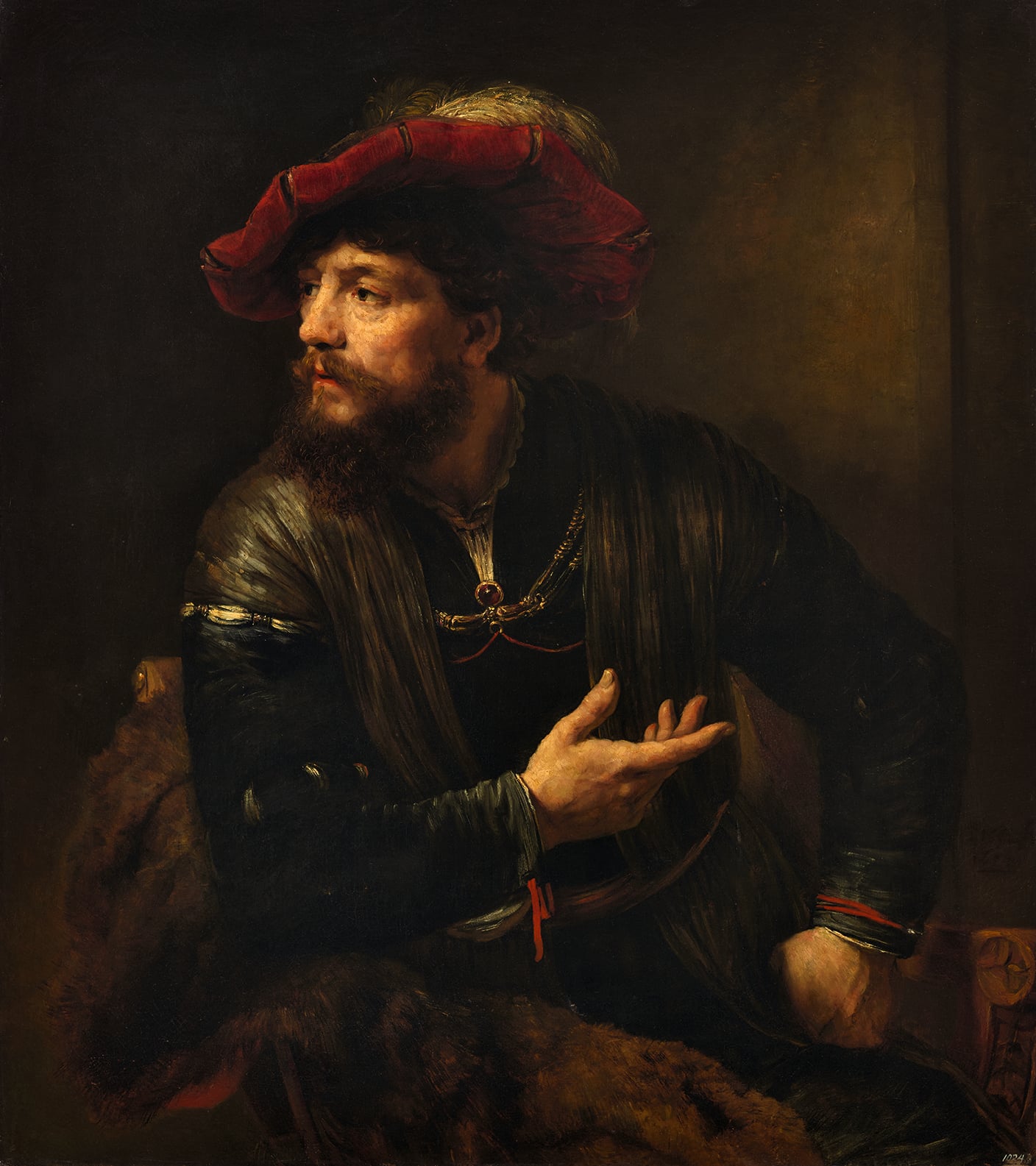
The great and very rare work which was the part of the famous Rothschild family collection during four generations, and which has been known in the art world as ‘the Rothschild Willem Drost’ had been acquired for his unique The Leiden Collection by Dr. Thomas S. Kaplan, an exceptional art collector with a superbly fine knowledge of art and deep humanist vision for its purpose.
“There are things which cannot be unseen”
In his exclusive comments regarding the seminal acquisition, Dr Kaplan explained:
“ When we first saw Man with a Plumed Red Beret, my wife and I were completely stunned by its power and beauty. It is ever so rare that artists capture the emotional energy that Willem Drost achieves in this most exquisite image. We both found his painting so exceptional that it became the first and only work of art that The Leiden Collection ever borrowed from anyone!”
This fact alone speaks volumes. The quality of The Leiden Collection, with its 19 Rembrandts, 7 Lievens, and 27 works of van Mierises, father and his two sons, and the only Vermeer in private ownership, is unique. With their vision, policies, and produced fantastic international exhibitions, The Leiden Collection can be justly called an art institution of the top world rank.
Their attention to this painting in particular, with its amazing history, did not come by chance.
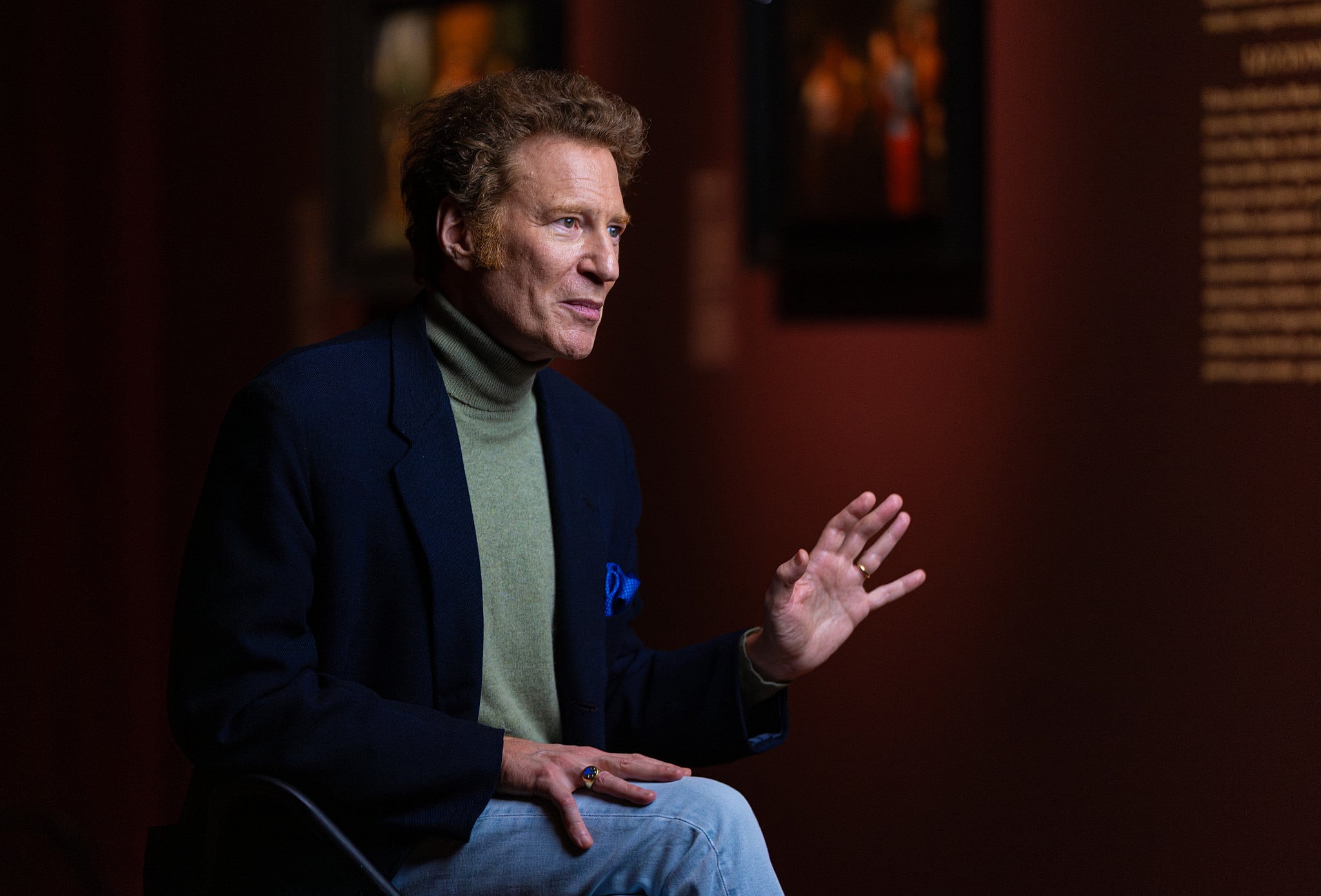
As Dr Thomas S. Kaplan told me, “To the extent possible, we collect artists in depth…that is to say, multiple examples. Yet we now have only one Drost. In truth, seeing Man with a Plumed Red Beret spoiled us. Some things cannot be unseen, and hence for us, it became the aspirational paradigm. It is simply unique — a generational acquisition as well as a bona fide treasure. It exhibits an exhilarating use of light and shadow that rivals the greatest of the Rembrandt School.”
Comparing this new fantastic addition to some other works from The Leiden Collection, its owner noted an interesting parallel with regard to another highly talented Rembrandt student, Carel Fabritius: “In fact, in its bravura effect, Carel Fabritius comes to mind. Our masterpieces of both ( Rembrandt’s) pupils are united not only in their scarcity, but breathtaking impact too.”
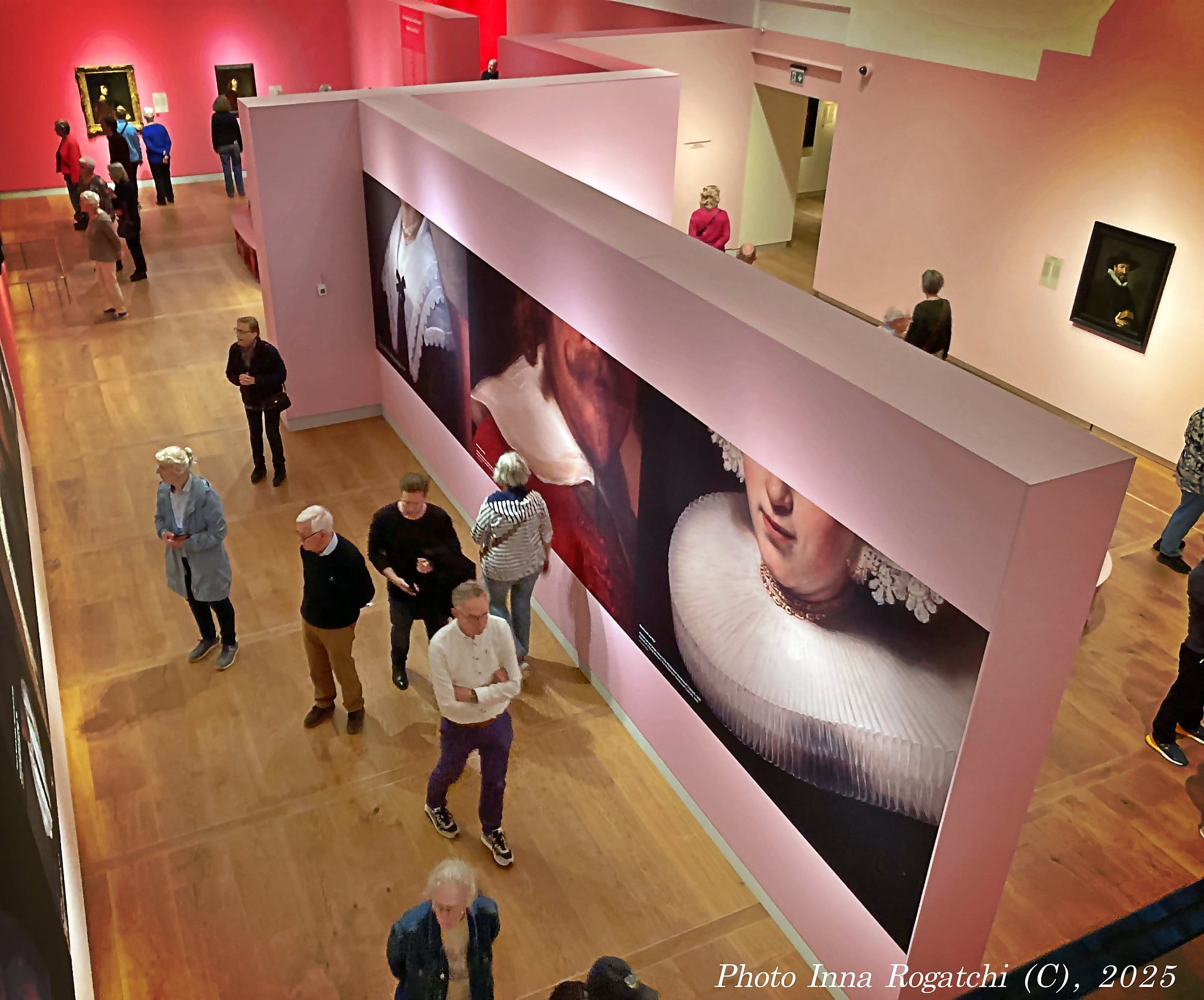
This comparison is deep and multi-dimensional. As Drost, Fabritius was an artist of immense talent and craft. As Drost, he lived quite a short life, just 32 years. Fabritius’ surviving artworks are twice rare nowadays than very rare works of Drost. We know only 13 works of Fabritius, which were the subject of deep admiration of van Gogh, and between 23 and 29 works of Drost today. The Leiden Collection amazingly has works of them both.
Willem Drost: Unique Talent Among the Old Masters
The work in question, Willem Drost’s Man With a Plumed Red Beret (1654) is unique in many ways. It is large, it is mighty, it is remarkable in its artistic skills. It is rare in the conveyed deep psychology of the portrait. No wonder that it has been believed to be the work of Rembrandt for three hundred years.
Among about 30 known works of Drost, twenty belong to various leading museums, six are with an unknown provenance, and only three being part of private collections, including the latest acquisition by The Leiden Collection.
Living a very short life, and dying tragically of pneumonia in Venice at only 25, Drost nevertheless has achieved a lot. He was working at home in the Netherlands, in Germany and in Italy. Being an outstanding student of Rembrandt, he, despite his young age, has influenced such notable artists as Johan Carl Loth and possibly Salomon Adler.

Taking the mighty art of Drost for his teacher Rembrandt was not an isolated episode in the history of art. Additionally to the case with the Man with a Red Plumed Beret, the other well-known Drost’s work, The Philosopher ( 1653), belonging to the National Gallery of Art in Washington D.C. since 1942, was believed to be by Rembrandt for quite a long time, until the mistake was noticed and corrected.
I was lucky to discuss the episode in detail with the man who made the re-identification, Dr Arthur K. Wheelock Jr., renowned art historian, who was a legendary head for the Northern Baroque paintings at the National Gallery of Art for several decades, and who is a senior art adviser for The Leiden Collection.
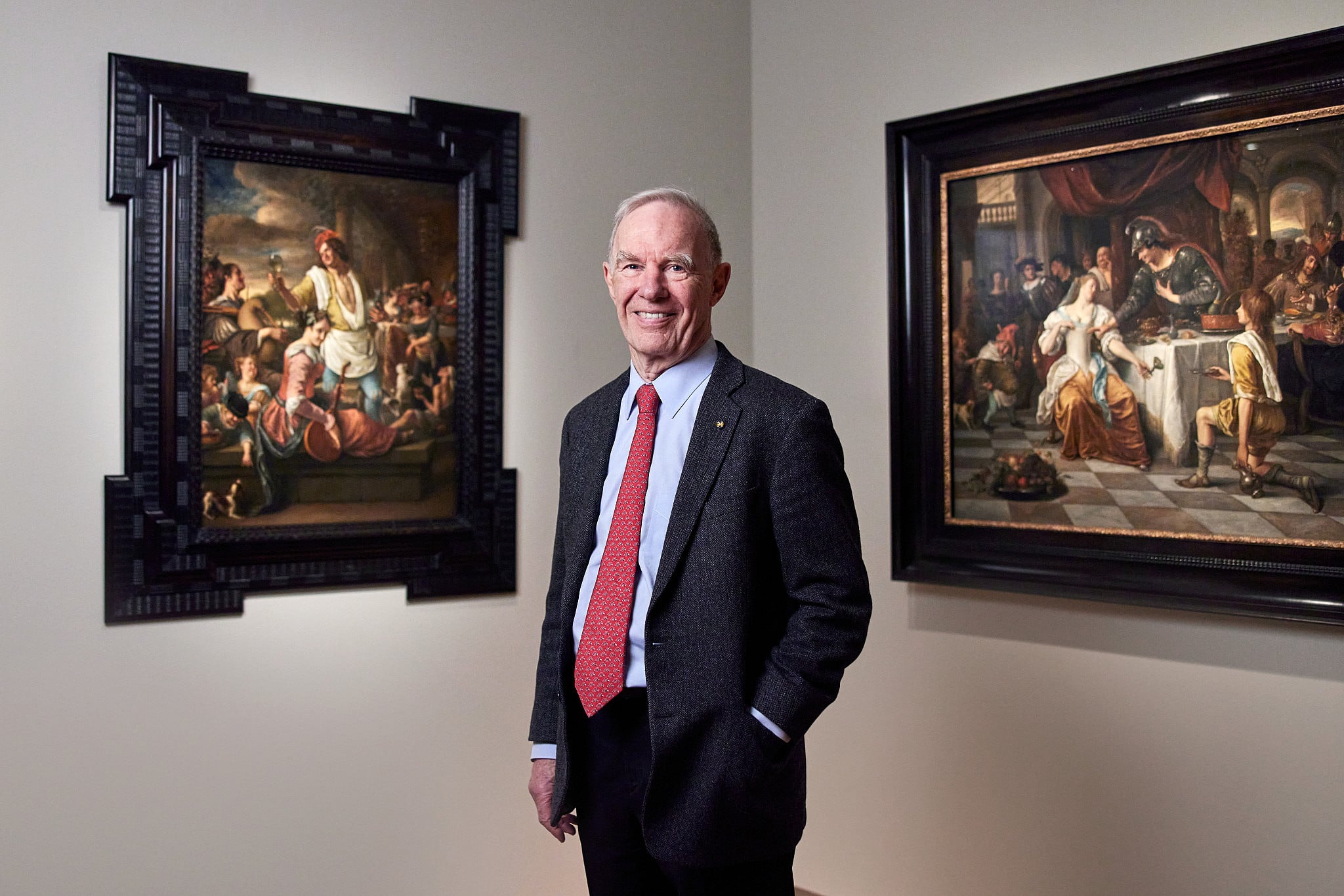
“ It was a long and painstaking process, to have a qualified, detailed look at that work, – recalls Dr Wheelock. – The work is painted over two panels, one is walnut and another smaller one, in the lower part of it, is an oak. At some stage, the lower panel on which the hands of that philosopher are painted has been cleared. When it happened, something started to get my attention and bother me there. I started to have my doubts about the attributed Rembrandt’s authorship of the work. Then I compared it in detail with Rembrandt’s Aristotle with the Bust of Homer. In that work, Rembrandt’s attention to his Philosopher, Aristotle’s hands is very telling. And it became clear to me that our Philosopher is not by Rembrandt, unfortunately. So, we did change the attribution of the work to the “Rembrandt’s Workshop (Possibly Willem Drost)”, as it has been stated for almost 30 years by now.”
Dr Wheelock also shared his insights regarding the rare quality of Drost’s art:
“ He obviously had a mighty talent. And he knew Rembrandt’s works well. There is one thing to attend the Rembrandt’s workshop, and another is to become the master in one’s own right, learning from the great artist so deeply that it is becoming your own vision and the way of your expression. In some of Drost’s works which belong to the leading museums world-wide, you can see the proof of his really amazing way of learning from Rembrandt – such as in his Bathsheba which is in the Louvre. Interestingly, both works were completed in the same year, 1654 ( the same year that our Man with a Plumed Red Beret was ), and both are in the Louvre. They are close, but Dorst did not directly copy Bathsheba from his teacher. He was not a member of Rembrandt’s workshop in that year, he left some years earlier. He was learning, and he has learned well. His works are very powerful indeed, simply fantastic”, – says Dr Arthur K. Wheelock Jr.
“Finding a crucial and elusive piece of a mosaic”
While discussing his recent outstanding acquisition, I asked The Leiden Collection’s owner, Dr Thomas S. Kaplan, about his personal reflections in this regard. His response was enlightening:
“Our personal connection to this work is only enhanced by our inherent responsibility of stewardship and the very ethos of our collecting philosophy: when a work of such magnitude becomes available, bringing it into a collection dedicated to preservation and dissemination does not feel like a purchase but indeed like an act of restoration and cultural transmission — like a duty, really.

Upon completing the acquisition, my primary reflection was one of immense professional satisfaction in finally bringing Willem Drost into the fold of The Leiden Collection. For years, we have endeavoured to create the world’s most comprehensive visual record of Rembrandt’s circle, and yet Drost remained a missing link in that powerful narrative.
To see his masterful hand at last represented in our holdings is deeply rewarding and fulfilling. It offers our viewers and “constituents” — the millions of individuals that have enjoyed the Collection through either its diffused lending policy or our global tour — an exceptional window into the work of an artist who, despite his immense talent, has often been overshadowed by his contemporaries.
Completing this acquisition felt like finding a crucial and most elusive piece of a mosaic; it allows us to present an even more refined and comprehensive story of 17th-century Dutch art. We are extremely grateful to Cliff Schorer and Agnews for their superb collaboration on this momentous enterprise.”
Although we know so little about this powerfully talented artist Willem Drost who lived and created almost 400 years ago, with help of such undisputed experts as Dr Arthur Wheelock it is fortunately possible to reconstruct some important facts related to Drost’s life, art and the work in question, Man with a Plumed Red Beret.
“ We can safely assume that Drost was not a member of Rembrandt’s workshop from the early 1650s on. At the time of creating the Man with a Plumed Red Beret, he was working as an independent master for a few years already. Most likely, the person in the work was a model. There is at least one more portrait by Drost with the same man depicted. What does attract the attention to this work in particular, is the psychologism of a portrait that Drost has demonstrated in this work in particular so convincingly, being at the same time so young. He was only 21! This is truly impressive.
Another important feature of this work is the strength of the character that Drost was able to create and convey in the portrait. These qualities are truly rare in the art of the period and in general, as well. It is a very strong, powerful painting created in the manner and vision of Rembrandt’s. So we can quite convincingly see what Rembrandt was able to do not only on his own, exploiting his immense talent, but also how his artistic legacy has continued in his students. It is a rare treasure from this point of view as well” , – emphasised Dr Wheelock.
Unique work at the unique collection
Rare acquisitions of superb historic art are always appealing news for everyone who is interested in culture. But in the case of The Leiden Collection, we are speaking about a special art institution with a noble vision. I have asked its owner, Dr Thomas S. Kaplan to tell me more on how he sees the way in which his unparalleled art collection works for the public for years by now:
“ The Leiden Collection is about private collecting for the public good. Our vision has always been centered on broad and effective accessibility — lending paintings to over 80 museums internationally and organizing world-class exhibitions at some of the most renowned cultural institutions on the planet, including the Louvre, the Hermitage or the National Museum of China.
Our latest show at the Norton Museum in West Palm Beach just ended, attracting 95,685 visitors — a 50% bump above its normal attendance.
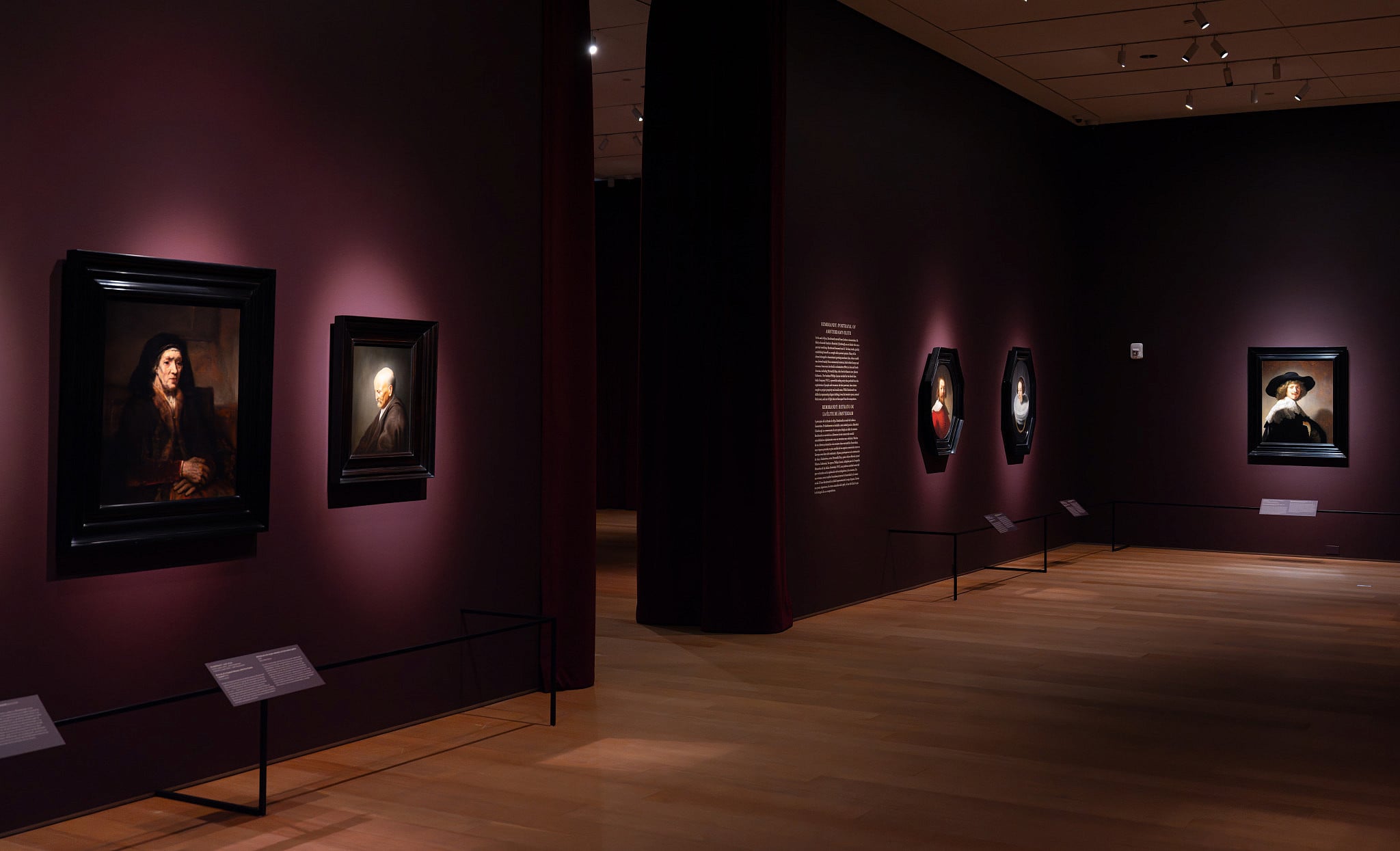
It is my firm belief that The Leiden Collection belongs in the public space, where it can inspire, educate, and unite. The Collection will continue to travel in 2027 and we certainly look forward to having the Drost painting join the show. Its journey to the Collection is complete, but its life as a public treasure is only just beginning.” – Dr Thomas S Kaplan has shared his vision.
Given the existing practices of The Leiden Collection public life, its fantastic exhibitions, at which one has a rare feeling to be shared with utmost treasures in an elegant and enlightening way, I am sure that the public life of the great work of Willem Drost, which will be seen publicly for the first time in centuries, will be rich, magnetic and inspiring. And the spirit of his great teacher will be reaching to us again, as it does from every show of The Leiden Collection anywhere.
March-May 2026
Inna is internationally acclaimed public figure, writer, scholar, artist, art historian, curator and film-maker, the author of widely prized film on Simon Wiesenthal: The Lessons of Survival and other important documentaries on modern history. Inna Rogatchi is author of War & Humanity and co-author of POST-HARMONY special projects originated in the aftermath of the October 7th, 2023 massacre in Israel. She is an expert on public diplomacy and was a long-term international affairs adviser for the Members of the European Parliament. She lectures on the topics of international politics and public diplomacy widely. Her professional trade-mark is inter-weave of history, arts, culture, psychology and human behaviour. She is the author of the concept of the Outreach to Humanity cultural and educational projects conducted internationally by The Rogatchi Foundation of which Inna is the co-founder and President. She is also the author of Culture for Humanity concept of The Rogatchi Foundation global initiative that aims to provide psychological comfort to people by the means of high-class arts and culture in challenging times and situations. Inna is the wife of the world renowned artist Michael Rogatchi. Her family is closely related to the famous Mahler-Rose musical dynasty. Together with her husband, Inna is a founding member of Music, Art and Memory, M.A.M. international cultural educational and commemorative initiative which runs various multi-disciplinary projects in several countries. Inna and Michael Rogatchi have been also founding members of the European Leonardo Art, Science & Humanity cultural and educational network ( Italy). Her professional interests are focused on Jewish heritage, arts and culture, commemorative art and education, history, Holocaust and post-Holocaust, October 7th and post-October 7th challenges. She is author of many projects of the commemorative art, and of several projects on artistic and intellectual studies on various aspect of the Torah and Jewish spiritual heritage. She is twice laureate of the Italian Il Volo di Pegaso Italian National Art, Literature and Music Award, the Patmos Solidarity Award, the New York Jewish Children’s Museum Award for Outstanding Contribution into the Arts and Culture (together with her husband), and the other recognitions. Inna Rogatchi was a member of the Board of Trustees of the Jewish Community of Helsinki and Finland, member of the Board of the Finnish National Holocaust Remembrance Association, member of the International Advisory Board of the State Vilna Gaon Museum ( Lithuania), and is member of the International Advisory Board of The Rumbula Memorial Project ( USA). Her art can be seen at Silver Strings: Inna Rogatchi Art site – www.innarogatchiart.com
[ad_2]
Source link