
In a pay-to-play art-fair ecosystem largely designed to keep galleries coming back and collectors entertained, new fairs looking to gain a foothold can’t stray far from the traditional model. But the founders of BUTTER Fine Art Fair didn’t want to play the game as it’s usually played and, in fact, strayed so far from what’s typical that—on paper—it reads less like a fair than a social justice initiative. But BUTTER, which launched in 2021 in Indianapolis and expanded to Los Angeles for L.A. Art Week, is very much a fair, albeit an experimental one that’s exploring in real time what happens when the economic structure of an art fair is rebuilt around artists.
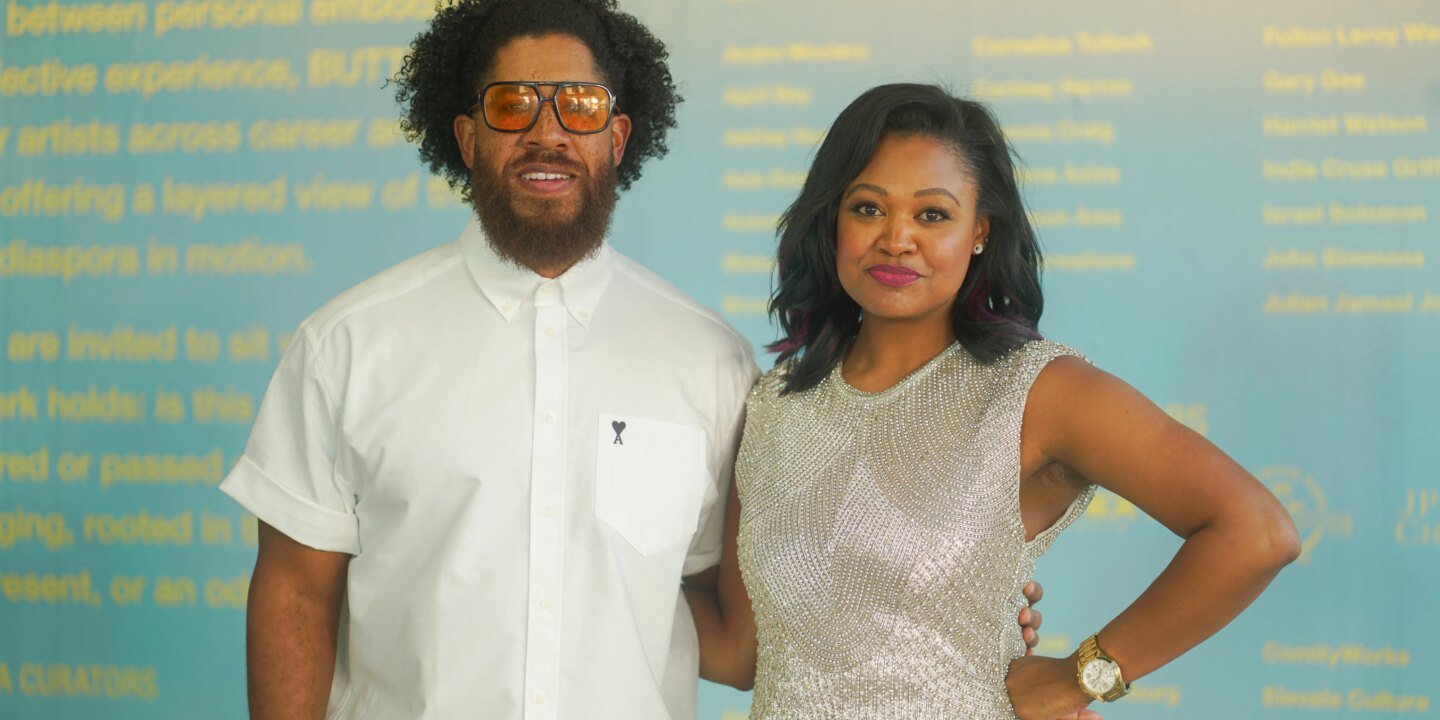
Launched in 2021 in Indianapolis by the cultural development organization GANGGANG, which was co-founded by Malina Simone Jeffers and Alan Bacon, BUTTER was conceived in the aftermath of the racial equity reckoning that swept the cultural sector after 2020 and asks a blunt question most fairs avoid: if artists generate the value, why do they see so little of the revenue? The answer is structural rather than rhetorical. Instead of the familiar art-fair pipeline—galleries applying for booths, paying hefty fees and presenting a roster of artists—the fair has artists and collectives mounting exhibits directly. Chosen through a juried selection process, invited artists not only don’t pay booth rental fees; the fair also covers travel and accommodations. More importantly, the financial model removes many of the intermediaries that normally skim profits off the top. There are no commissions, so sales proceeds flow directly to artists in one of the few serious attempts in the U.S. arts ecosystem to redistribute economic power.
In its first five years, BUTTER has featured nearly 200 artists and welcomed more than 46,000 visitors, generating over $1 million in art sales, all directed to artists. Each edition typically presents 30 to 50 exhibitors spanning emerging names, mid-career artists and occasional established figures from across the United States and the broader African diaspora. The price points reflect the same diversity: works can start in the low hundreds and climb into the six-figure range, making the fair as comfortable for first-time collectors as it is for seasoned buyers.
But the fair’s appeal isn’t just economic. BUTTER sits squarely at the intersection of several shifts reshaping the contemporary art landscape: a growing insistence on equity for Black artists historically sidelined by the commercial gallery system, the decentralization of the art market away from its usual ivory towers and a wave of artist-centered platforms experimenting with new ways to connect creators and collectors.
Ultimately, BUTTER is equal parts marketplace and testing ground. The fair managed to expand beyond its Midwestern origins in just a few short years, suggesting the model has legs beyond its original civic context, but whether it can reshape the broader fair culture is still an open question. Observer caught up with Jeffers and Bacon to learn more about the origins of the fair, how it works and where it’s headed.
First, tell me about GANGGANG. What drew you to focus on the intersection of social justice and the arts?
In 2020, during the social justice and unrest taking place across the country, we saw the need to make culture a platform for justice. With our deep experience in civic engagement and creative advocacy, we wanted to develop a model that centered equity—not just in message but in economic impact—by ensuring artists retain control of their work, their narrative and their financial futures. GANGGANG is about shifting power back to the artists and creators who make our culture meaningful. It is about proposing to cities that centrality of arts and culture can improve the bottom line, the equity within and the narrative of a place.

In terms of the fair, let’s start with the obvious! Why “BUTTER”?
BUTTER softens the rigid structures of the art market. It signals that culture can be nourishing, accessible and built on joy, not just commerce. It’s a cultural nod that signals smoothness, excellence and confidence. We wanted a name for the experience that instantly felt familiar and comforting to all.
Art fairs aren’t the first thing I think of when I think of equity. How did launching an art fair support GANGGANG’s mission?
Traditional art fairs are built around galleries, dealers and institutions, while artists frequently receive only a fraction of sales. Through BUTTER, we flip the narrative by centering the artists. From the beginning, we designed the fair to maximize artist agency and earnings, offering a space where artists sell directly to collectors and retain 100 percent of their proceeds with no entry or exhibition fees or commissions. Since 2021, BUTTER has generated over $1.5 million in sales that go straight to artists, with the inaugural BUTTER LA generating more than $175,000, proving that equity and sustainability aren’t mutually exclusive.
How does a fair where 100 percent of sales proceeds go directly to the artists work financially? What are the biggest structural obstacles in staging a no-commission fair?
The no-commission model requires intentional revenue planning. Sponsorships, grant support, ticket sales and partnerships underwrite production costs, including everything from venue rental to staffing and event infrastructure, so the artists don’t have to absorb those costs or pay commissions. A non-traditional model such as ours requires funders who understand long-term value over short-term branding, and that’s not something every partner is used to navigating.
The biggest structural obstacles are perception and scale. Many sponsors and institutions are conditioned to traditional pricing models and visibility exchanges. We’re constantly educating partners about why investing in artists first isn’t just ethical, it’s smart. When they see artists retaining 100 percent of their sales and building viable career pathways, we win over the skeptics.
Who is your collector target? Who is buying at BUTTER?
Our collectors include seasoned collectors expanding their collections and institutional buyers acquiring pieces for permanent holdings. We are also a place for first-time buyers investing in original work, as we build the collector market alongside the artists.

Do you feel that there is tension between activism and commerce with an initiative like this? Or the potential for it if BUTTER gets much bigger?
There’s always tension when you’re building within systems you also critique. But for us, commerce isn’t counter to our value—extraction is. We intentionally design both the experience and the economics to be artist-forward, and as BUTTER scales, that imperative only deepens. Growth won’t mean dilution but expanding opportunities for artists, collectors and cultural stakeholders to participate in an equitable market. Our commitment to economic justice and structural access remains non-negotiable.
How has staging the fair in Indianapolis versus staging the fair in L.A. been different?
Indianapolis is where the experiment began—rooted in community, context and a deep sense of ownership. Its impact is palpable: artists, families and local institutions see their city anew, and that place-based pride makes the experience powerful. By contrast, Los Angeles expands that model into a global market at a different pace and scale. L.A.’s collector base is broader and more institutionally connected, but the spirit is the same—a demand for art experiences that are equitable, culturally grounded and artist-centered. Now, with BUTTER LA produced by stoodeo—our production agency designed to scale these experiences—we’re able to bring our model to new markets thoughtfully, rooted in community and cultural impact.
Do you have thoughts about future markets you’d like to break into?
We’re intentional about expansion. The goal isn’t a coast-to-coast cookie-cutter footprint but nurturing environments where artist ecosystems can thrive. Cities with rich creative histories and emerging Black arts communities feel like natural candidates, but any new market must align with our values of access, long-term investment and deep community engagement. BUTTER requires significant emotional, financial and physical investment. Where it spreads has to be based on invitation and impact.
What kind of feedback have you gotten from artists who participated in the L.A. edition of the fair?
The feedback in Los Angeles was overwhelmingly positive. There was a clear sense that L.A. has been needing something like BUTTER: a platform that intentionally highlights Black artists while also introducing new audiences to collecting in a way that feels accessible rather than intimidating. Artists shared that it felt affirming to be centered during L.A. Art Week, rather than positioned at the margins of larger fairs. For many, it wasn’t just about sales but visibility, relationship-building and being centered within the richness of Black L.A.’s cultural ecosystem. BUTTER offers a different kind of art experience during a week that can often feel exclusive by ensuring accessibility for students, families and first-time collectors.
Whose work is in your collection? Which artists should our readers be following?
Indianapolis artists like Ashley Nora, FITZ! and Gary Gee represent the depth of talent emerging from the Midwest. Ashley’s work carries an emotional and textural resonance that feels both intimate and expansive, while Gary’s sculptural practice reflects a distinct point of view rooted in community and lived experience. The artists collectors should follow are those building sustainable careers, shaping visual language in real time and expanding what the art market makes room for. And many of them are coming through BUTTER.
More Arts Interviews