The nature of visual art is constantly evolving, and emerging artists have to navigate the challenging dynamic of referencing the centuries of art history that have come before them, the established artists who are creating the strongest works right now, and trying to forge a unique path that references this all within their own signature style.
Olya Eliseeva, Natalia Kungurova and Medina Mammadkhanova are three artists rising to this challenge. They all create work in varying styles that reflect their unique backgrounds and what it means to be a contemporary artist working across Europe and the UK.
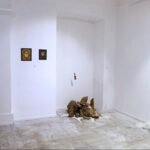
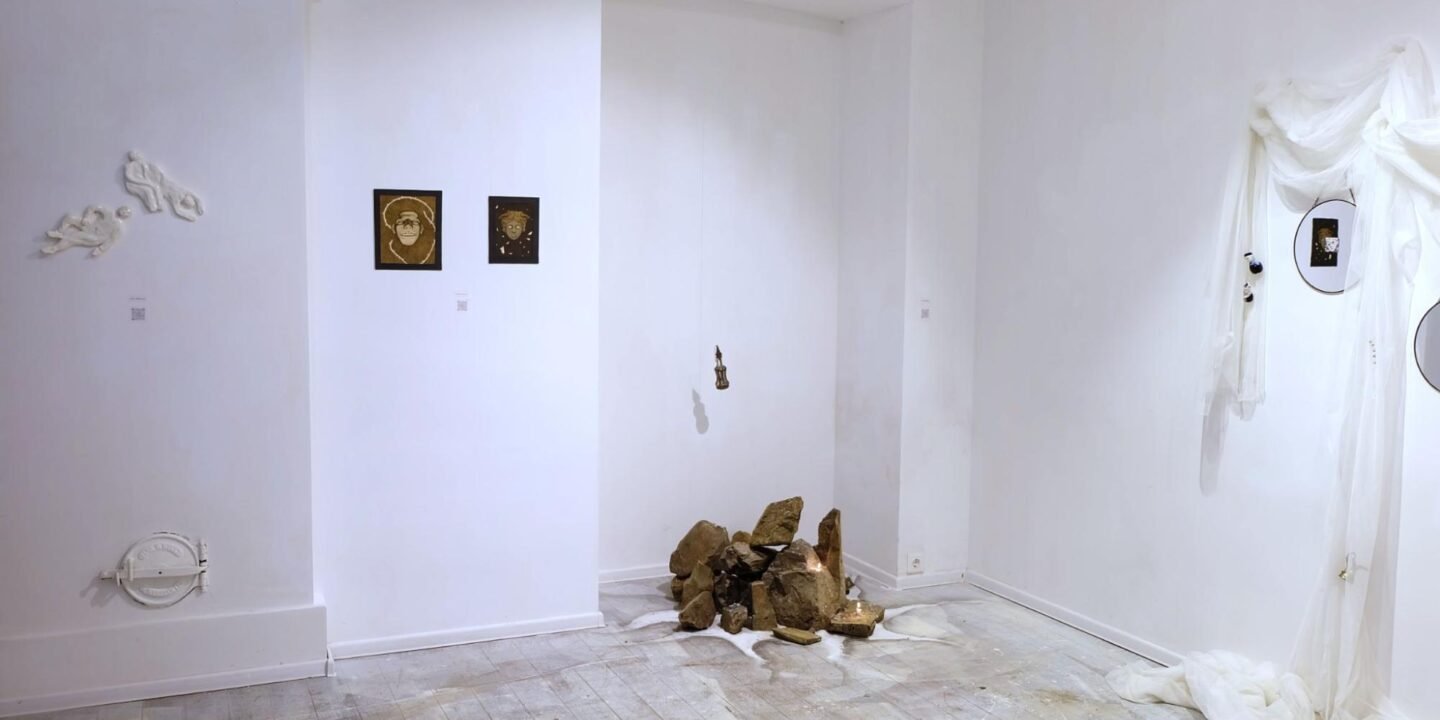
Olya Eliseeva’s work features kinetic elements, including a swinging lantern above a sculptural installation, which reminds me of religious ceremonies. She also incorporates performance into her practice, using her own body as part of the work, much like artists such as Ana Mendieta did, but Eliseeva’s work has a more tranquil air. She isn’t instructing the viewer how to feel, but instead allowing them to find their own interpretation of the piece.
Her latest work, ‘Name It’, adopts a more vulnerable stance, with the exposed body seen from behind, sometimes veiled, showing how her work is evolving to become more personal and revealing of her own life experience. It fits into a wider movement towards recognising the power of resilience and the constant objectification that female bodies have been subjected to via the male gaze. It’s a movement that’s rightly given greater prominence to artists such as Mendieta and Frida Kahlo, but also one that’s being built upon by contemporary artists such as Tracey Emin and Sarah Lucas.
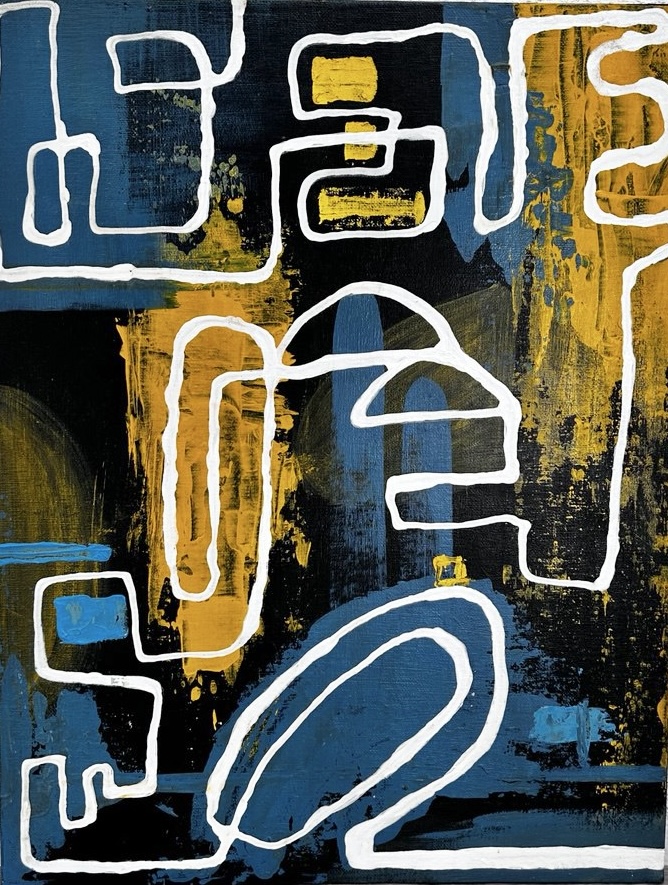
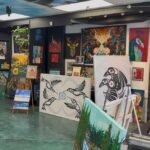
Natalia Kungurova also focuses on the human experience and resilience, but takes a far more abstract approach, using gestural paintings that don’t immediately make the narrative behind them clear. Yet, just like other abstract painters such as Gerhard Richter and Mark Bradford, and the Abstract Expressionists that came before them, there is more to discover under the surface.
The clues lie in the titles of works such as ‘Broken Dreams/Unattainable’ and ‘Power of Shadows’. She is trying to show us what lies beneath the surface of all of us, the pain, the struggles, the recovery that we all go through in life. It’s not always visible, but it’s still there beneath the surface, and just as with her paintings, the story can’t be seen by simply skimming the surface but only by spending time with these works. Seeing where the marks, colours and textures take us and speak to us, telling us more about our own struggles than about the artist’s journey that inspired them.
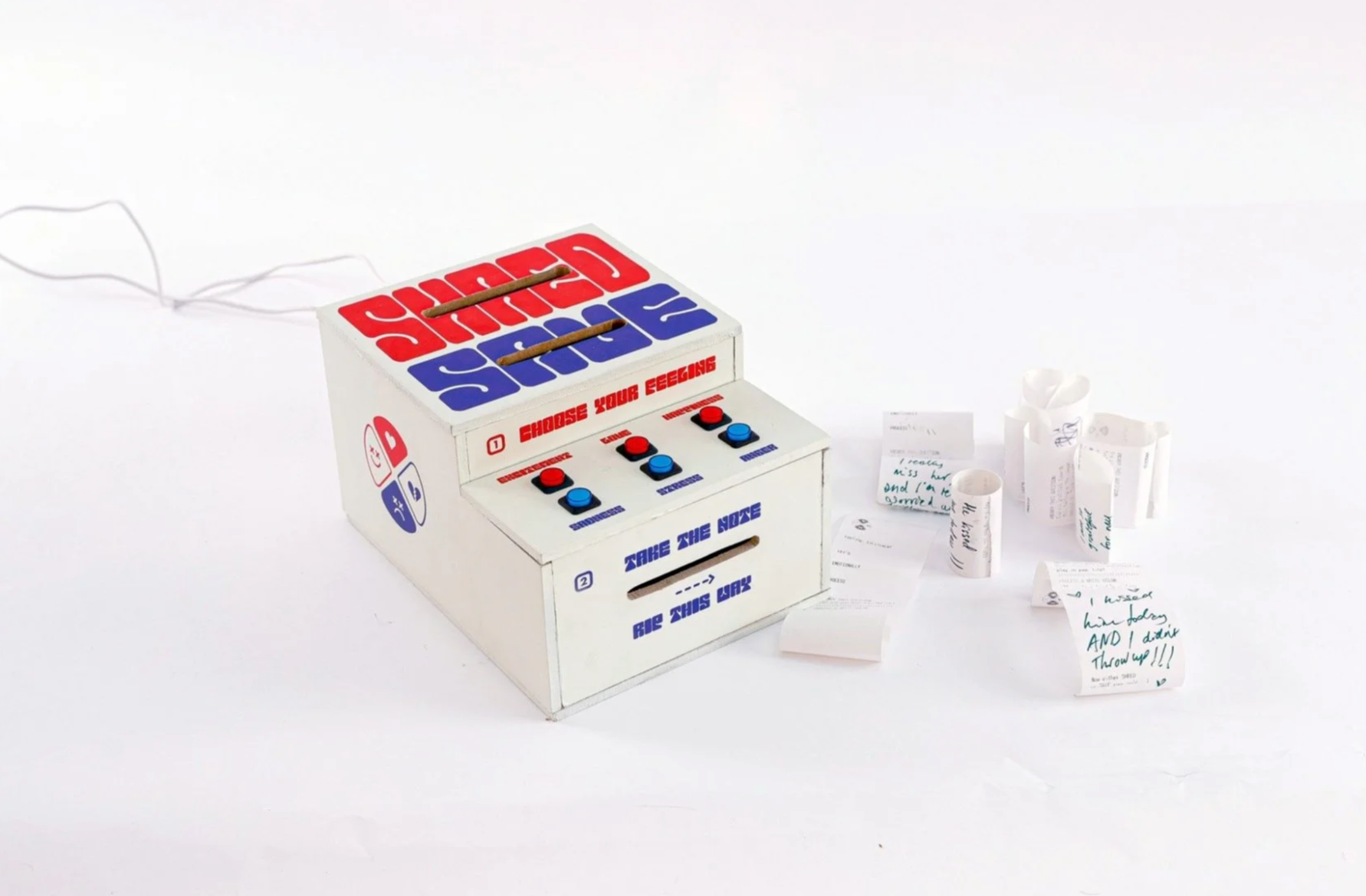
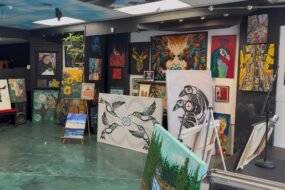
Medina Mammadkhanova takes this idea of sharing our emotions to an interactive level. Her installation ‘Emotional Processor’ asks each participant to select an emotion, receive a printed question, write down their emotion and then either keep the note or shred it in a moment of catharsis.
It questions how we let machines and algorithms determine our emotions, rather than look within ourselves for answers. It’s a work that’s become even more relevant in a time when many people immediately turn to ChatGPT for an answer to a difficult challenge, rather than attempting to answer it themselves. Amalia Ullman created a ‘fake’ social media as part of her ‘Excellences & Perfections’ work, and as social media has evolved and our lives are increasingly guided by algorithms, artists questioning how it manipulates us is becoming an important element of artistic discourse.
All three artists have taken radically different approaches to reflecting the emotional and spiritual. Yet what unites us all is that uniquely human experience; we all feel, we all hurt, and we all heal. We’re living in an age of online arguments and divisive discussions around gender, race and sexuality. These three artists all ask us to remember what brings us together. They are asking: when so many factors drive us apart, could art be the reason to reunite us?
More information on Olga Eliseeva’s work may be found on her website and Instagram.
More information on Natalia Kungurova’s work may be found on her website and Instagram.
More information on Medina Mammadkhanova’s work may be found on her website.
All three images are copyrighted and courtesy of the respective artists. First image: Olya Eliseeva. Second image: Natalia Kungurova. Third image: Medina Mammadkhanova.