With the UK’s grassroots scene being provided with some respite this week, attention now turns towards long-term solutions and the much-discussed arena ticket levy – but what happens next and when can we expect to see action?
Last week, it was revealed that 30 grassroots venues were lost forever between July 2024 and July 2025, and last year alone saw more than half of those remaining making no profit and over 6,000 jobs lost. This poses an existential threat to the future talent pipeline of the country’s world-renowned live music industry.
Some relief came this week when the government delivered a U-turn and a package of extra support for pubs and venues, after previously dealing them a devastating blow with massively increased business rates. However, the industry is asking for much more investment in the ecosystem.
For years now, there has been pressure mounting for the UK’s smaller venues and rising artists to receive a contribution from arena and stadium gigs to ensure their survival. The model – already in use in several countries across Europe similar to the one seen in the Premier League of football – was given the government’s backing back in 2024, but criticism surrounds how larger shows in the UK have brought in record profits with many not paying into the system.

Announcing the government’s 15 per cent rate decrease, Creative Industries Minister Ian Murray said that it would “provide vital reassurance and financial stability to venue operators who have faced real challenges in recent years”, but added: “We now want to see more major players in the music industry step up and back the voluntary ticket levy. I urge all major venues, artists and promoters to adopt the levy on stadium and arena concerts, with £1 from every ticket sold going directly to support the industry at the grassroots.”
Ben Lovett of Mumford & Sons explained to NME that it was “too easy” for them to build in the £1 contribution to their arena tour, asking: “Why not do that?” Artists have proven this is possible with no extra cost to the consumer.
“It just feels like a weird thing to withhold at this stage,” he continued. “If anything, it signals to the government that we’re in this together as an industry: we care a lot about what happens to other artists, fans and venues. It’s not just all about a self-centred approach, there’s a togetherness that comes from encouraging others to sign up to those sorts of initiatives.”
Coldplay‘s Chris Martin agreed, previously telling NME: “There’s nothing wrong with staying on the first rung [of the ladder]” of playing live and that side of the ecosystem needs to be kept as a viable career too.
“It doesn’t bother me that there might not be another Coldplay, but it does bother me that there might not be acts that are free to start on the bottom rung and work all the way up – so that by the time they get to stadiums, they are really good. You can’t just jump into that,” he added.

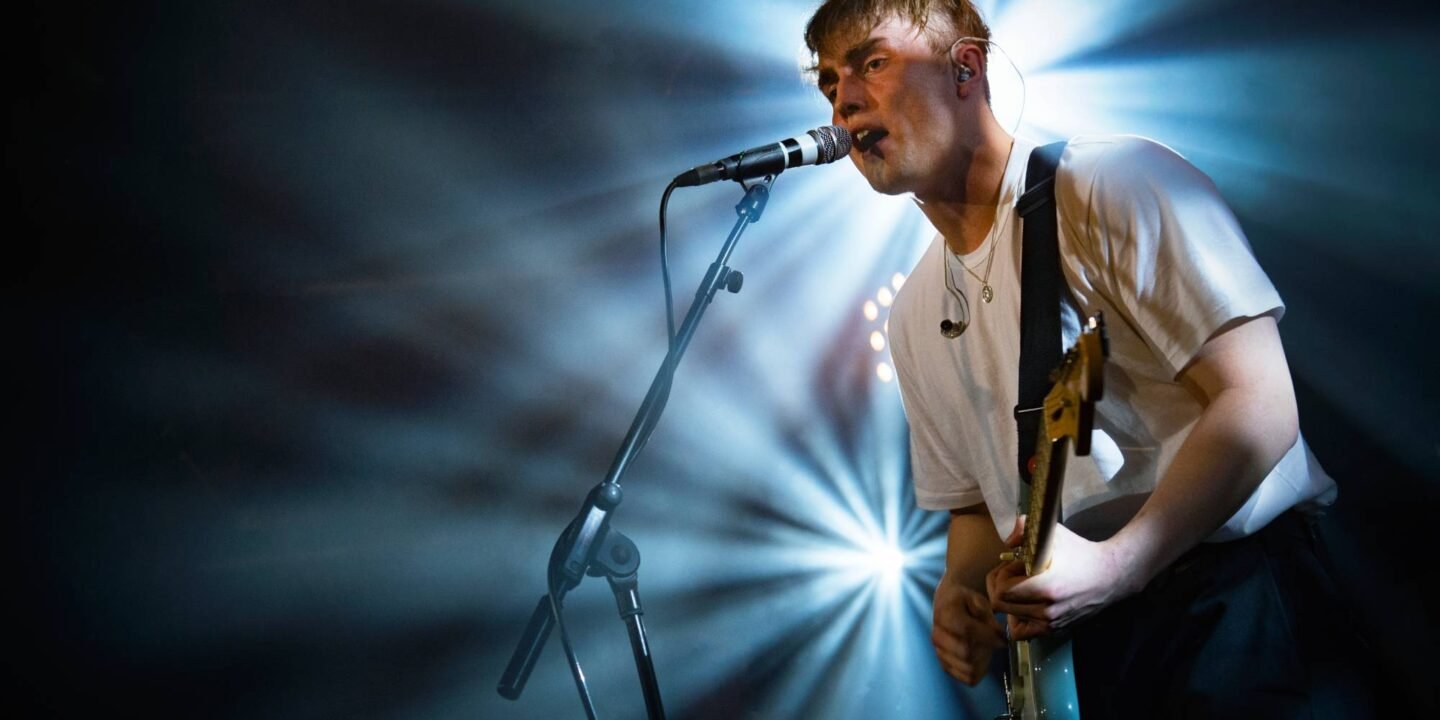
Revealing the findings of their annual report last week, Music Venue Trust CEO Mark Davyd praised the voluntary arena and stadium contributions from Sam Fender, Mumford & Sons, Pulp, Radiohead, Kneecap, Wolf Alice and more, which have raised over £500,000 for the LIVE Trust scheme, as well as several major companies for their contributions to the levy.
So far the government has been waiting for the industry to proactively and voluntarily make the levy work before they step in and legislate to make it law and mandatory. Last year, it was expected that 50 per cent of stadium and arena gigs would be paying into the levy by the end of 2025. This was not met, and a new deadline has been set for June 30 2026. With just 8.8 per cent of shows in 2025 signing up to the levy, Davyd put the blame largely at the foot of market leader Live Nation.
“These companies are delivering,” he said of the likes of SJM, Kilimanjaro and AEG. “Live Nation, you know, and the whole industry knows, you are not. If the voluntary levy fails, it will not be the fault of the companies who have already embraced it, or Music Venue Trust, or the government, or any will to do it on behalf of individuals, artists, managers, agents, audiences or anyone else.
“It will be a direct consequence of the overwhelmingly dominant force in the arena and stadium market deciding not to deliver a voluntary levy. That’s your choice, Live Nation, and everyone in the industry hopes you make the right one.”
The grassroots sector subsidised live music by £76.6million in 2025, while recent larger shows at arena and stadium level saw UK live music contribute a record-breaking £8billion to the economy.
Live Nation, who played a part in Harry Styles contributing £1 for each ticket to his upcoming Wembley Stadium residency to the LIVE Trust, responded to the criticism by telling NME that they “support artists’ choices on charitable donations, and has worked with numerous artists who have contributed to the voluntary levy – from Coldplay to Biffy Clyro – and will continue to do so.”

Speaking to NME at the end of last year, Secretary of State for Culture, Media and Sport Lisa Nandy said that the government were looking to “keep driving the progress” to meet the 50 per cent target.
“Our position remains the same: if we don’t see the progress that we expect, then we do reserve the right to intervene and put that on a statutory footing,” said Nandy. “It’s not our preferred model; we’d rather the industry got its act together and came together to ensure that grassroots venues were protected and supported.
“We think it’s in the interests of the industry as a whole. If you don’t have the venues like the kind we have in Wigan that helped acts like The Verve to come through, then it has a knock-on effect on the whole industry.”
“Just as we said with ticket touts, if the industry won’t take action then we won’t hesitate to intervene on behalf of fans.”
Recent years have seen the UK suffer from the “complete collapse of touring“, with 175 towns and cities declared “gig deserts”, and 35million people without live music in their area or community. In 1994, the average length of a tour of grassroots venues around the UK was 22 shows with 28 locations on the primary and secondary circuit. After decades of decline – growing more steep in recent years – the average length of a UK tour is now around 11 shows with only 12 locations on the primary and secondary circuit.
This perfect storm has resulted in artists unable to afford to tour, venues struggling to make ends meet, and agents, promoters and managers becoming more risk averse. Music can grow stagnant with the safe option being taken, audiences are left wanting, and the artists of the future are left uninspired.

It is for that reason that the LIVE Trust is committed to sharing any levy money among artists, managers and promoters as to ensure the entire ecosystem benefits. In 2025, it was reported that music sales had hit a 20 year high, all the while “beneath the surface, UK artists earn far below average salaries,” argued industry insiders. In 2024, Lily Fontaine of future Mercury Prize winners English Teacher told a government hearing that they were “working full-time but earning less than minimum wage”.
“That’s not legal,” she continued, “but it’s the way that the industry works and the way it is now for us. If we do make money, it’s a little bit because our label has chucked us some money to make things even. We make a little bit of money from selling merch, but the bigger capacity venues can take a cut of that.”
Speaking at the follow-up hearing a year later, Wolf Alice guitarist Joff Oddie warned that with music venues closing, artist costs rising and the loss of touring opportunities brought about by post-Brexit complications, “one of the things we risk is that music becomes a middle and upper class sport”.
“We’re already seeing that representation decline,” he offered. “There are all kinds of statistics showing that’s gone down of the last 15-20 years – especially for people outside the south east of England.”

Oddie continued: “It’s costly to build a career, and the build a career you need to go on the road. Once you get past a point, there is money to be made in the industry. Music is big business, but if we don’t fund that from the beginning then we aren’t going to get big artists.
“Unless we feed the pipeline, we’re just going to have people going to see US pop stars at Wembley.”
Artists need to be able to afford to live and tour, and promoters need to be able to take risks while venues keep the lights on, stay open and improve their offering.
The LIVE Trust this week announced their first funded programmes, with the initial phase “designed to put money directly into programmes that support the entire grassroots ecosystem, from artists to festivals and venues, through to promoters, production and talent pipelines”. Seven programmes will be revealed on their “mission to protect, expand and support grassroots music across the UK”.
As part of this phase, the Featured Artists Coalition – a UK trade body representing the rights and interests of musicians and creators – have also revealed details of their Artist Touring Fund to deliver vital financial support for UK artists to “tour sustainably at a time when rising costs are making live performance increasingly difficult”.
Speaking at their NME-supported AGM in London at the end of last year, FAC CEO David Martin said that “the concept of this levy is gaining momentum” from arena acts and venues including Royal Albert Hall, and that more support was essential.
“The LIVE Trust and its trustees are doing a great job, and several million pounds have already been committed from artists including Pulp, My Chemical Romance, Ed Sheeran, Wolf Alice, Biffy Clyro, Tame Impala, Florence & The Machine and Radiohead,” he said. “The aim is that the revenue is distributed to everyone involved in putting on grassroots shows, including independent promoters, venues and performers.
Speaking to NME, he added: “While we welcome this momentum, we remain clear: voluntary participation must scale quickly and equitably. If it doesn’t, statutory measures may still be required. The UK live sector has the opportunity to lead globally in creating a sustainable grassroots touring model—we’re committed to helping make that happen.”
FAC chair and Blur drummer Dave Rowntree highlighted that the levy would “offer a genuine lifeline to artists who are struggling to finance the costs of grassroots touring, without which there is nothing”.
“Especially in the coming age of AI where it can become very easy to make bad music,” he continued. “Touring is absolutely vital to artists. That said, we have to be realistic. Demand for this type of funding (which has never previously been available to artists) is likely to vastly outstrip what we can supply.”

He added: “If live music isn’t available to artists and if the barriers to entry are too high and too expensive, then everybody else suffers: managers, agents, promoters, ticket companies, venues and arguably audiences. There’s a lot invested in this.”
Speaking during an NME-chaired panel at the AGM, Ivor Novello winning Orla Gartland said that she was “very hopeful about the hunger for diversity in music” on the live stage.
“Everything online feels hard to hold,” the singer-songwriter said. “It’s all very intangible and digital and hard to connect with and make sense of. It’s already happening, but I predict a harsher swift of the pendulum to those gnarly days of really sweaty, moshy gigs. They feel so important right now and find that really encouraging. Not the industry behind it, but live music itself gives me so much hope because they’re so tangible, compared to when I’ve been on campaign and making stuff for TikTok.”
She continued: “I describe the artist experience as ‘the horse shoe of pain’. At the top is a timeline of writing the music and making the music, which I love, and then at the playing the gigs, which I also love. Everything in between is deep, deep pain! The online promo? Deep pain. Anyone who enjoys it is a big red flag.”

Gartland added: “What’s really encouraging for me is selling tickets, going out, seeing the whites of people’s eyes and them singing your songs back to you. That’s the real meat and potatoes. That’s why the levy is a really exciting thing.”
Producer, beat-maker and multi-instrumentalist edbl spoke of his experience of “growing up in the North West and playing loads of tiny, shit gigs”.
“You need to have that experience to get better as an artist and performer,” he argued. “Now there’s been a shift in the milestones where you blow up on whatever platform and play your first ever gig to 1,000 people. That’s a different way of doing it, but I’ve benefitted massively from playing loads of tiny gigs and larger shows as a session musician. When I came to do my own project, I was really prepared. I know a lot of venues in Liverpool that really need this, so hopefully we can shift it a bit.”
This also marks Independent Venue Week, with over 236 independent venues putting on over 700 gigs across the UK in a bid to “celebrate the incredible diversity of live music we continue to support all around the UK”. IVW CEO & Founder Sybil Bell explained how it was a “complete no-brainer” for arena and stadium shows to “give a little back to those further down the pyramid”.
“Everyone knows the costs involved with live music have rocketed,” said Bell. “If artists can’t afford to perform, if promoters are unable to risk investing in shows and if venues can’t keep the lights on, then the entire business has a fundamental problem.”
She added: “It’s also essential that we can continue attracting audiences, especially new audiences, into independent venues and get them to experience the joy of live music.”

Among their own initiatives, Music Venue Trust recently announced that 2026 was the year for them to “change gear” by expanding frontline venue support and emergency relief, as well as investing £2million immediately to permanently reduce costs and improve sustainability around issues including venue MOT, lowering bills and reducing costs, and more affordable or free accommodation for touring artists.
“Our catchphrase is: don’t fund it, fix it,” Davyd told NME. “We all know what the problems are, and by fixing those problems everybody benefits. If we fund them, then the only people who benefit are the ones you gave the money to.”
MVT’s Mark Davyd pointed to the findings that 93 per cent of music fans agree with the £1 levy, and argued that the likes of Live Nation may “have misunderstood the intention of the government, the political atmosphere, and the public atmosphere”.
“It’s a terrible shame,” he said. “It is much easier to do a voluntary levy and we did have that opportunity available to us. It will be a terrible shame if it’s missed. This is happening all across Europe, in Australia, in Canada, everyone is having the same conversations and the same opportunities are there.
“I will feel a great deal of sympathy with my colleagues in the music industry who will have really done as much as they can to make a voluntary levy happen. If it’s not possible to do it, then we have to just be practical and accept that the government isn’t prepared to see more venues closing, less communities with access to music and very large multinational companies making more profit than ever. Those two things are not compatible as far as they’re concerned.”

He ended by saying that a fully-funded system with all major parties contributing to the levy and LIVE Trust could see not only see the UK to a full and thriving tour circuit for fans, artists and gig spaces – but more venues opening and opportunities for artists in the years ahead.
“The ambition should be that within five to 10 years of the levy having been adopted and invested wisely, we should be seeing a healthy touring circuit and maybe we’ll get back up to the 30+ cities that used to get just about every tour, and then the 60 or 70 that would regularly feature on the national touring circuit.
“We’re missing a good two-thirds of the population with a music offer, and that’s not good for anybody.”
Davyd added: “My personal view is that it would be a terrible shame if we ended up with a statutory levy. If the music industry can’t work out how to do this voluntarily, then we accept that we can work with the government to get there.
“By 2027, the number of venues should be starting to go back up again. By the end of this decade, we should able able to say very proudly, ‘We turned this around, more venues are opening than are closing, more communities are getting access to live music, more artists are getting more support, and more promoters can take more risks’.
“There’s a five year window coming up in which we turn this around.”
Also making headlines this week was the launch of new “ethical” resale platform Tickets9 in partnership with Music Venue Trust to automatically pay into grassroots levy.
Independent Venue Week continues until Sunday February 1. You can find all the details about events and participating venues on the IVW website.