This Q&A is part of The Asia Pivot, Artnet Pro’s biweekly members-only newsletter that provides mission-critical analysis, insights, and exclusive intelligence on developments in Asia’s art markets, with a focus on business opportunities and challenges. Subscribe here to receive it directly to your inbox every other week.
The Chennai-based Indian art collector and logistics heir Jaiveer Johal has amassed an extensive collection of South Asia art that ranges from Indian Modern masters such as M.F. Husain and Krishen Khanna to contemporary icons like Sunil Gupta. In 2024, he founded the Avtar Foundation for the Arts, which is named after his mother, to promote Modern and contemporary South Asian art.
Under the motto “for Madras, from Madras” (the former name of the city that he now calls home), Johal hopes to bring art to a wider local audience while putting the city back on the country’s culture map through exhibitions of art drawn from his collection, which centers on themes like home, displacement, and the politics of the body.
Ahead of the launch of Art Basel Qatar and the return of India Art Fair in February, we caught up with Johal for his take on the rise of India on the global art stage and predictions for the region’s future.

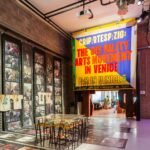
Installation view of “Untitled! Portraiture through the Avtar Collection,” the inaugural exhibition of Avtar Foundation for the Arts in December 2024. Courtesy Avtar Foundation for the Arts.
Would you agree that India is having an art-market boom right now?
Two significant developments are happening simultaneously in the Indian art market. On one hand, auction results for Indian Modern masters have reached record highs, generating a lot of buzz and renewed confidence. Sales at Sotheby’s, Christie’s, Saffronart, and others have shown sustained momentum.
At the same time, contemporary gallery programs have matured considerably. Galleries such as Experimenter, Nature Morte, and Jhaveri Contemporary are mounting ambitious exhibitions abroad that fill historical gaps, particularly from the 1960s through the 1990s, reframing Indian art within a global art-historical context. These efforts go beyond commercial success. They introduce artists long respected in South Asia to audiences encountering them for the first time.
The market now has real depth. While marquee collectors still matter, there is a broader base of serious buyers at the top end, creating competition and reassuring international collectors that the market is no longer dependent on a few names.
How is this impacting you as a collector?
I often joke that I’ve become a contemporary art collector by force of the market. I began as a collector of Indian Modern art, but rising prices have made those works increasingly out of reach. I came to contemporary art later, and today I collect it primarily just because I don’t think I can afford Modern works anymore.

Lawh Wa Qalam: M.F. Husain Museum. Courtesy of the Qatar Foundation.
Are you saying that collectors are getting priced out for Indian art?
Yes, I think collectors are being priced out. Indian art has never had a lot of billionaire collectors. If you talk to old-school galleries, they would tell you they have sold works to people such as a professor who didn’t have the money immediately but would pay for the work over a year or two. I bought works in the same way before, too.
Now, a lot of institutions are looking back to see if they have these artists in their collection. When museums and sustainable collections are being built and the auction market is generating a lot of interest, there is a sense of FOMO creeping in.
Am I happy as a collector? Perhaps not, because there’s much less I can buy now. But as an enthusiast of South Asian art, I am happy these broader conversations about the missing gaps in South Asian art are happening.
Is this Indian art market boom having an impact outside South Asia?
It’s interesting. A bunch of Indian billionaires have made Singapore home in recent years or haveone foot out there. When you have people who have an interest in the arts moving outside of India and having multiple homes, it will lead to cultural integration. They are going to bring in bits of their art and culture and their collecting practices.
For example, Sudarshan Venu, the chairman and managing director of TVS Motor Company, the main sponsor of the South Asian Insights section at this year’s Art SG, is currently based in Singapore, which is also home to the company’s global headquarters. Some collectors I know from India who have moved to Singapore are deeply involved with the National Gallery Singapore and they are looking at Southeast Asian art now because they are living there.

The 2025 India Art Fair ran in New Delhi in early February.
Amid the rise of India’s market and the immense attention on the Gulf, the inaugural Art Basel Qatar in Doha and the India Art Fair in New Delhi are taking place in the same week. Do you think they could be cannibalizing each other?
I don’t think they are going head to head. They way Art Basel structured it is very smart. Art Basel Qatar’s VIP preview days are on February 3 and 4, and India Art Fair’s preview days are on February 5 and 6. I know a lot of people who are going to Doha will go to Delhi after the Qatar preview days. Doha will act as a funnel to the India Art Fair, almost like one fair is leading into the other, rather than competing. The India Art Fair will end up getting a bunch of collectors who otherwise would not have come all the way from Europe. But if they are in Doha, I think they would make the effort and take a four-hour flight to come to Delhi. I will go to Doha. But I will skip India Art Fair this year because of a conflict with my personal schedule.
Why does Art Basel Qatar appeal to you?
The model of solo presentations at Art Basel Qatar is super interesting. It allows somebody like me, whose exposure is mainly to South Asian art, to be able to look at practices in a more focused way. When you go to a fair where a gallery is showing six, seven, or eight artists in a booth, you don’t get to learn about their practice. But when it’s a solo presentation, I will be able to see a body of work.
You mentioned that one reason to set up the foundation in Chennai is to foster the decentering of the art scene from traditional hubs like New Delhi and Mumbai. Do you think that decentering also occur in India’s art market?
Decentering will continue and it will deepen the market, or perhaps the entire ecosystem. While the calendar may feel increasingly crowded, what’s happening is that art is becoming visible to a much broader audience. Not everyone can travel to Delhi, Mumbai, Basel, Doha, or Singapore—but people will seek out galleries in the cities where they live. That wider, everyday engagement ultimately strengthens the ecosystem, and in turn, the market itself.