[ad_1]

Roles in the art industry are becoming increasingly fluid, and sustaining the market’s current scale will require more collaboration among its participants. As rising costs push many galleries to rethink their participation in art fairs, one collector is stepping up to make fairs more accessible. Raj Parmar, founding director of the new boutique fair, ENZO, has scheduled the first edition for L.A. Art Week, and his fair is free not only for visitors but also for participating galleries.
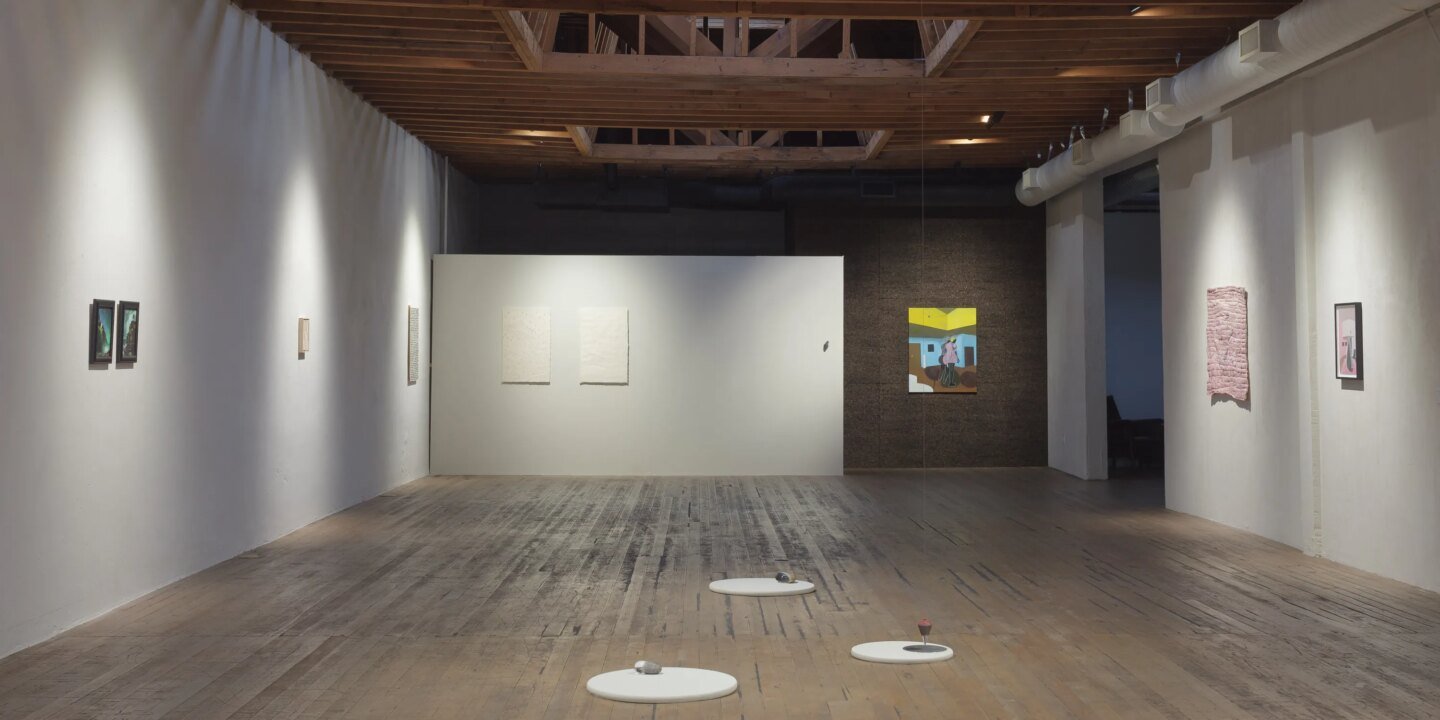
Running concurrently with Frieze Los Angeles, ENZO will take over a 1920s warehouse in Echo Park, just a short drive from The Broad, MOCA and Hauser & Wirth. There, it will bring together 10 emerging galleries from New York’s Chinatown and Lower East Side, in a bid to place East Coast voices in direct conversation with the L.A. art community at a moment when younger galleries are facing increasing financial pressure and many have opted to skip L.A. this year due to prohibitive costs.
“We decided on a small, free art fair as a response to the current state of the art world. Emerging, mid-career and blue-chip artists and galleries are all having a tough time in today’s art economy,” Parmar told Observer. “A smaller fair feels more intimate, casual and personal, and with three other fairs happening in L.A., we thought it would be meaningful to offer something different, particularly on the Eastside.”
The 5,000-square-foot warehouse, which has two main spaces and several communal areas, will host immersive installations, performance art, digital media, artist talks, site-specific projects and other discursive formats. ENZO, according to Parmar, was designed to remove the financial risk of participation and encourage more ambitious, experimental presentations.
The roster of participating galleries includes a strong mix of established, research-driven spaces known for talent scouting—such as Bank, Lubov, Magenta Plains and Margot Samel—alongside galleries less commonly seen at art fairs, including Sara’s Worldwide, Silke Lindner, Wschód and Alyssa Davis.
“The art world is remarkably small and fluid, extending beyond cities and national borders. The people you meet in New York often reappear in Paris or London during fair season,” Parmar added. While Los Angeles and New York are arguably the two most influential geographies for contemporary art in the United States, he pointed out that not everyone can travel to the East Coast to experience New York City’s downtown gallery scene firsthand. “Creating an intimate fair on the Eastside offers Angelenos a rare opportunity to engage directly with a distinct New York art ecosystem.”
ENZO, which opens on February 25 and runs through February 28, joins a growing constellation of satellite fairs and happenings held during L.A. Art Week alongside the main event, Frieze Los Angeles, which this year brings 95 exhibitors from 22 countries to the Santa Monica Airport. The dealer-led independent fair Post-Fair, founded by Chris Sharp, will take place February 26-28 in the historic Santa Monica Post Office building, with a curated but expanding roster of 25 galleries. The more glitzy Felix Art Fair will also return to the Hollywood Roosevelt Hotel from February 26 to March 1, with a VIP preview on February 25. This year’s edition features 57 international galleries, more than 20 of which are new to the fair—a signal of both turnover and the challenges of sustaining a West Coast presence. New York Life Gallery, Feia (Los Angeles) and SOM Gallery (Tokyo) are among the newcomers, alongside international exhibitors such as Cohju (Kyoto), Patel Brown (Toronto and Montreal), Era Gallery (Milan), Gallery Playlist (Busan and San Francisco) and Ungallery (Buenos Aires).
Yet as the fair landscape continues to expand, Los Angeles’s gallery ecosystem has experienced significant contraction, underscoring how the West Coast—and L.A. in particular—remains a challenging market for dealers. In 2025, several galleries closed their Los Angeles spaces, including established names such as Tanya Bonakdar and Sean Kelly, while the longtime institution L.A. Louver closed its Venice location to the public, entering a new phase centered on private dealing and pop-up exhibitions.
More in Art Fairs, Biennials and Triennials
[ad_2]
Source link