[ad_1]
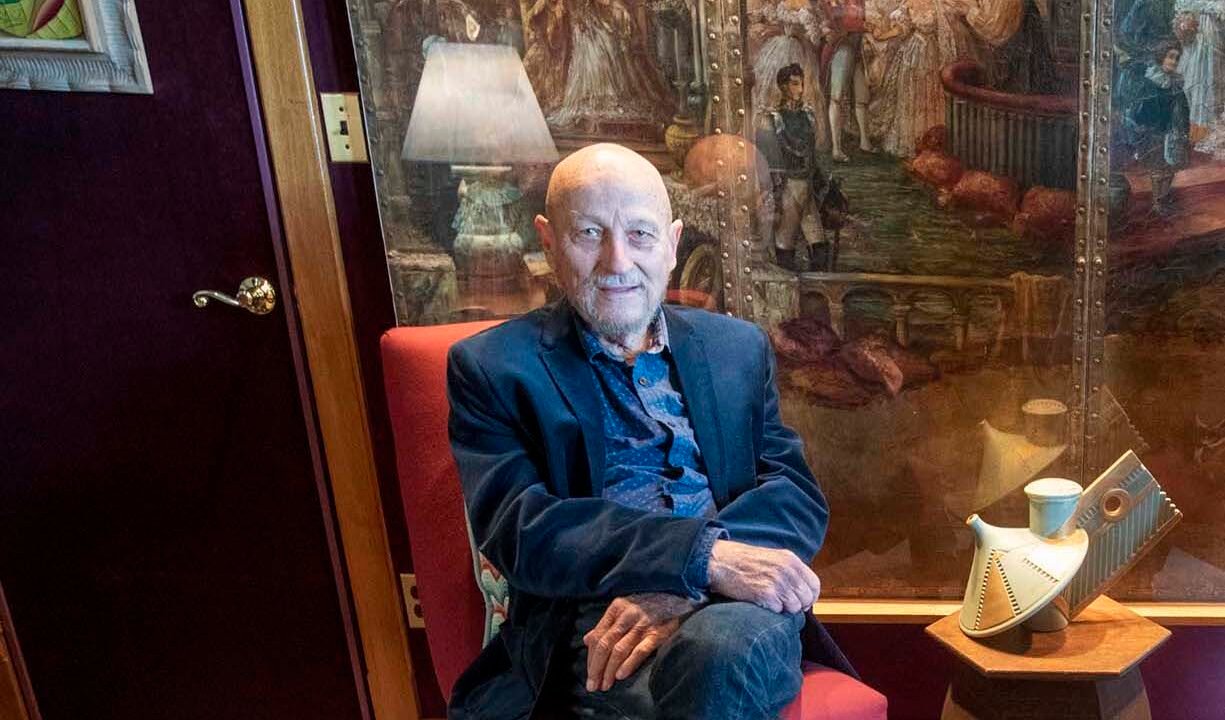
Bobby Gosh, whose songs were recorded by a range of artists, whose jingles played on national TV commercials, and whose Brookfield farmhouse became a sprawling, eclectic, art-filled abode where dinner parties ended around the piano, died at his home on New Year’s Eve. He was 89.
Billi Gosh, his wife of 66 years, cited liver and kidney failure as his cause of death.
Born and raised in Pennsylvania, Bobby began taking classical piano lessons at age 6. At 16, he played piano on a national tour of singer Kitty Kallen, who then had two top-10 hits.
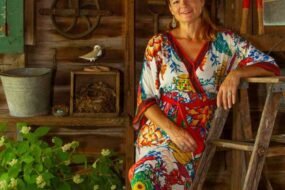
He attended Albright College in Reading, Pa., on a scholarship. That’s when he met fellow student Billi Williams, who one night came to hear his trio play in a local club. Both were engaged to others at the time, said Billi, a longtime Democratic political activist, but Bobby persuaded her to sneak out of her dorm that night to go to an after-hours musicians’ club. She tucked her dining hall uniform into her pocketbook so she could show up to work the following morning and met Bobby in the bushes.
“It worked out,” she told Seven Days on Monday.
So did Bobby’s music career. He had studied accounting at Albright just in case, and he interviewed with IBM after graduation. “You had to have a white shirt; you couldn’t even have a blue shirt,” he told Seven Days in 2011. The first question out of the interviewer’s mouth, Bobby recalled, was, “Why do you want to work at IBM?”
Bobby stared at him blankly.
“I went to Juilliard to study orchestration instead,” he recalled in 2011. “Never looked back.”
He played piano and sang in Manhattan nightclubs after class at the New York City music school. At Billy Reed’s Little Club, he met acclaimed lyricist Sammy Cahn, and the two began writing songs together, including “The Need of You,” recorded by Diahann Carroll in 1967. Bobby toured the world for two years as Paul Anka’s pianist, orchestra conductor and cowriter. Anka wrote English lyrics for the French song that became Frank Sinatra’s anthem “My Way.” When Sinatra listened to the demo, it was Bobby he heard singing and playing piano.

Bobby’s songs have been recorded by artists across genres, including the Vogues, Tommy James and the Shondells, Engelbert Humperdinck, Bobby Bare, Sammy Kershaw, Ray Price, Buddy Greco, and duo Steve Lawrence and Eydie Gormé. His song “A Little Bit More” became a Top 40 hit for Dr. Hook.
Bobby wrote music for movies, including the 1988 film Big and Woody Allen’s 1995 comedy Mighty Aphrodite. His jingles sold everything from Arby’s roast beef sandwiches to Honey-Comb cereal, and his “Welcome to Our World of Toys” melody played in FAO Schwarz stores.

A recording artist himself, Bobby opened for Barbra Streisand in New York City’s Central Park and for Billy Joel at the Troubadour in West Hollywood, Calif.
Billi named none of those accomplishments when asked what her husband was most proud of. “Our home,” she said instead. The couple bought a 960-square-foot Brookfield farmhouse in 1971 and moved there from Manhattan in 1976. They reared their children, Erik and Kristina, there and gradually added on to the house.
“We were trying to build … a new Victorian house,” Billi said. “So the house is a work of art, and then it houses a lot of works of art.”
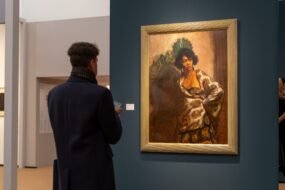
Now 9,000 square feet, the residence incorporates Victorian doors, windows and stained glass and displays paintings, sculptures, antique oddities and rare books. Bobby was the primary collector and became known for supporting visual artists by buying and promoting their work. He favored Victorian antiques, his wife said, as well as “outsider art” made by self-taught artists and work by Vermonters, including sculptor John Matusz and painters Philip Hagopian and Ronald Slayton.
Growing up with Bobby as a father was “never boring,” said Kristina Gosh, who recalled tagging along as her dad zipped through barns perusing antiques and other salvaged items offered at auction. Theirs “was a very social household,” she said. “There were always lots of people around for dinners and this and that, and they always ended up around the piano,” she said.
Kristina is an educator and interdisciplinary artist in Brookfield. Erik, once her father’s recording engineer, lives in Massachusetts.

Their parents built an entire room to house large-scale works by Rhode Island artist Tom Deininger, who considers Bobby his greatest supporter. Deininger, whose work is now in museums and private collections around the world, was a fledging artist in the late 1990s when Bobby began buying his mosaics composed of detritus and found objects arranged to look like landscapes, portraits and paintings. “He’s one of those people that you can point to and say, ‘That’s how I got to where I am today,’” Deininger said.
More than 200 works by late painter Slayton were part of the Gosh collection when Seven Days visited in 2011. Slayton, who worked in watercolor and oil, had become disillusioned and basically stopped painting when Bobby discovered his work in the early 1980s. The collector helped Slayton get jobs, including a show at T.W. Wood Gallery in Montpelier. Slayton’s son Tom, a writer and former editor of Vermont Life, credited Bobby in 2011 with helping his dad reclaim the recognition he deserved: “Bobby basically restored him to fame.”
Bobby did not buy art as an investment, he told Seven Days. “I wake up in the morning and feel good to just look at it,” he said in 2011. “Art is the soul of our house. If you took the art away, I’d feel like I was living in a cave.”
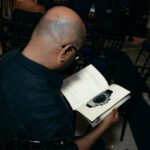
Bobby recounted his life in a 2016 book, Confessions of a Marijuana Eater: A Songwriter’s Memoir. He and his wife documented their home in a recently self-published book, The Neo-Victorian Residence & Art Collection of Billi and Bobby Gosh. Bobby was compiling notes for a third book about his belief system and philosophy, his daughter said.
Bobby had been adamant about living out his life in his Brookfield home, Kristina said. “He was going to die here, and he got to do that.”


[ad_2]
Source link